DOC dog teams throughout the Show-Me State are on call to assist local law enforcement agencies and their communities.

Story by Marcus Wilkins. Photos by Garry Brix.
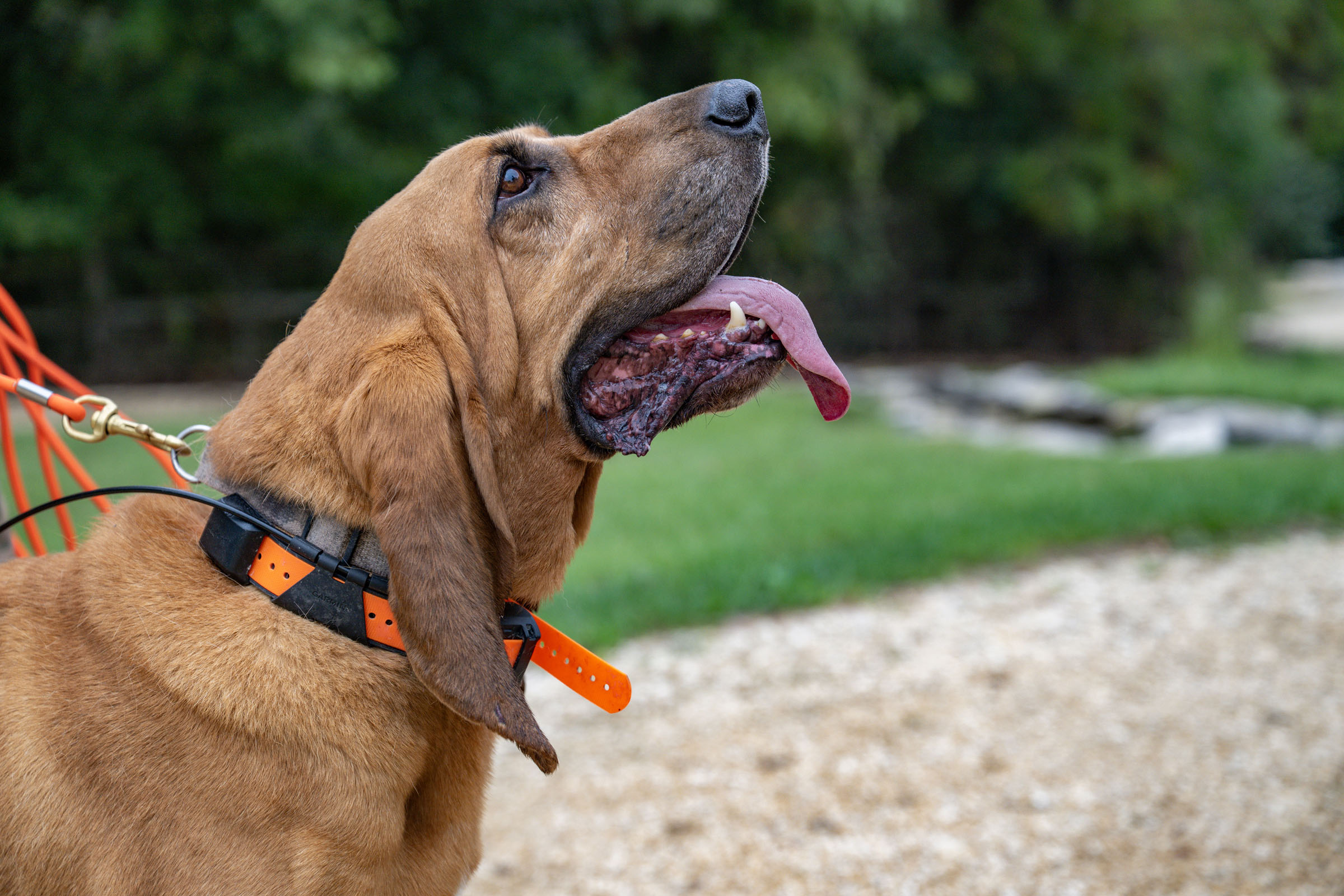
Miles is a consummate gentleman with numerous qualities: hard-working, well-behaved, affectionate, handsome with luxurious auburn hair. He’s quite the catch — if you can get past the slobber.
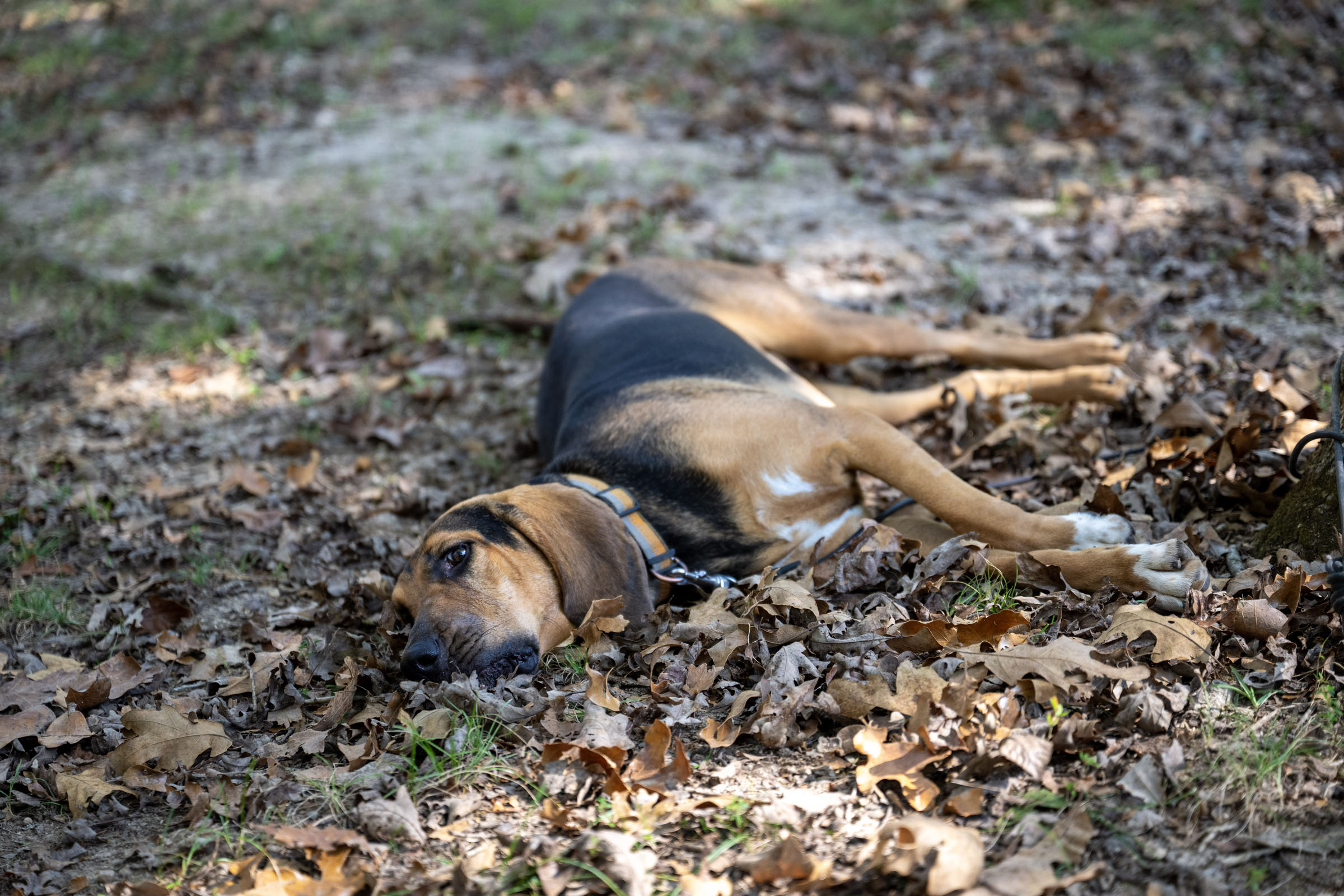
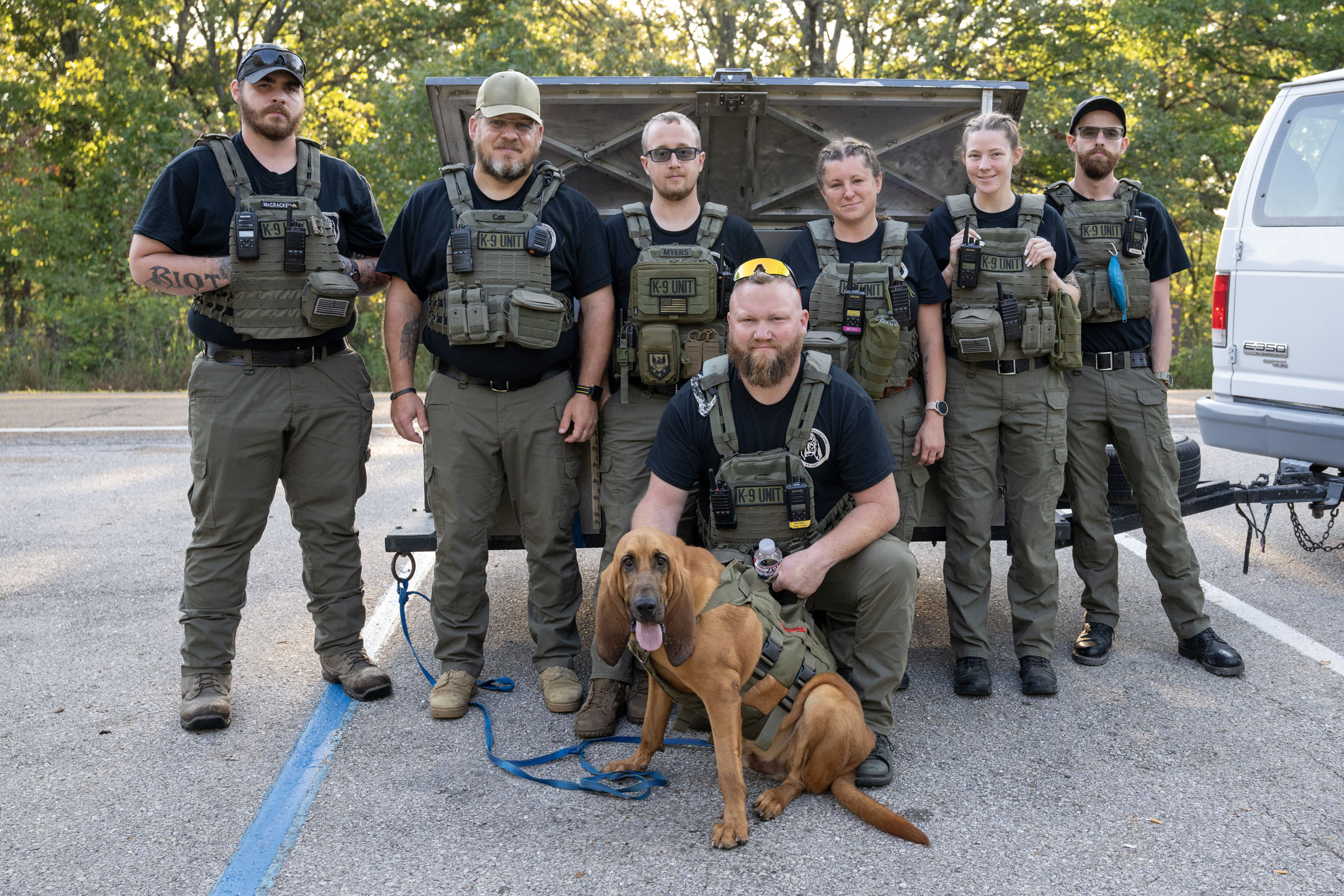
One of four bloodhounds on the search dog team at Northeast Correctional Center (NECC) in Bowling Green, Missouri, Miles earned his name for his unmatched endurance. On a recent mission searching for an elderly man with Alzheimer’s who was missing near Louisiana, Missouri, the peerless pup covered 10 miles before another assignment that same day in Wellsville tracking a different missing person over five miles.

“He was worn out after that one,” said Lt. Jason Woodhurst, one of four handlers on the NECC dog team. “He immediately laid down and didn’t want to get up. But we had a bag of treats for him, so he was happy.”
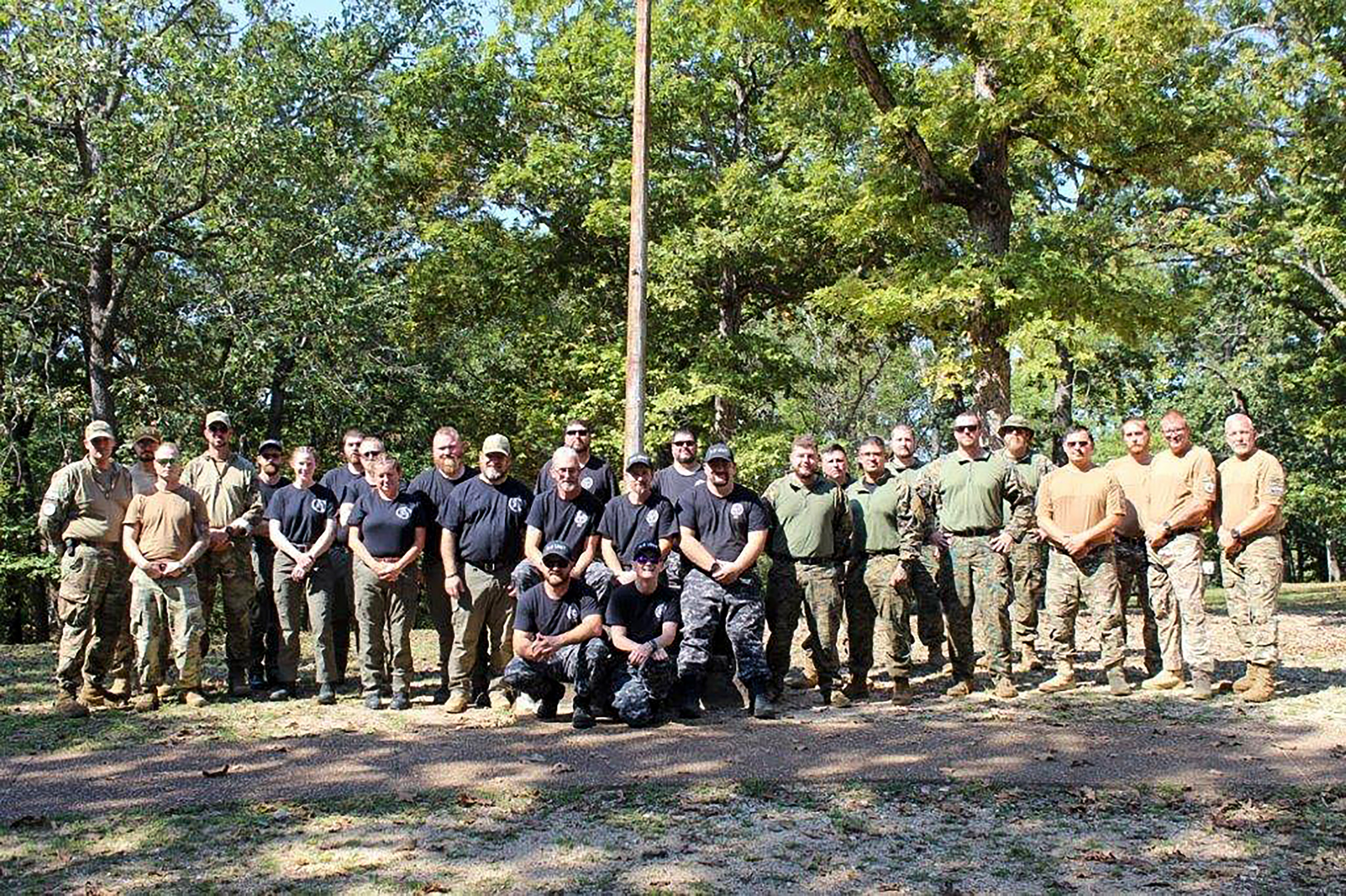
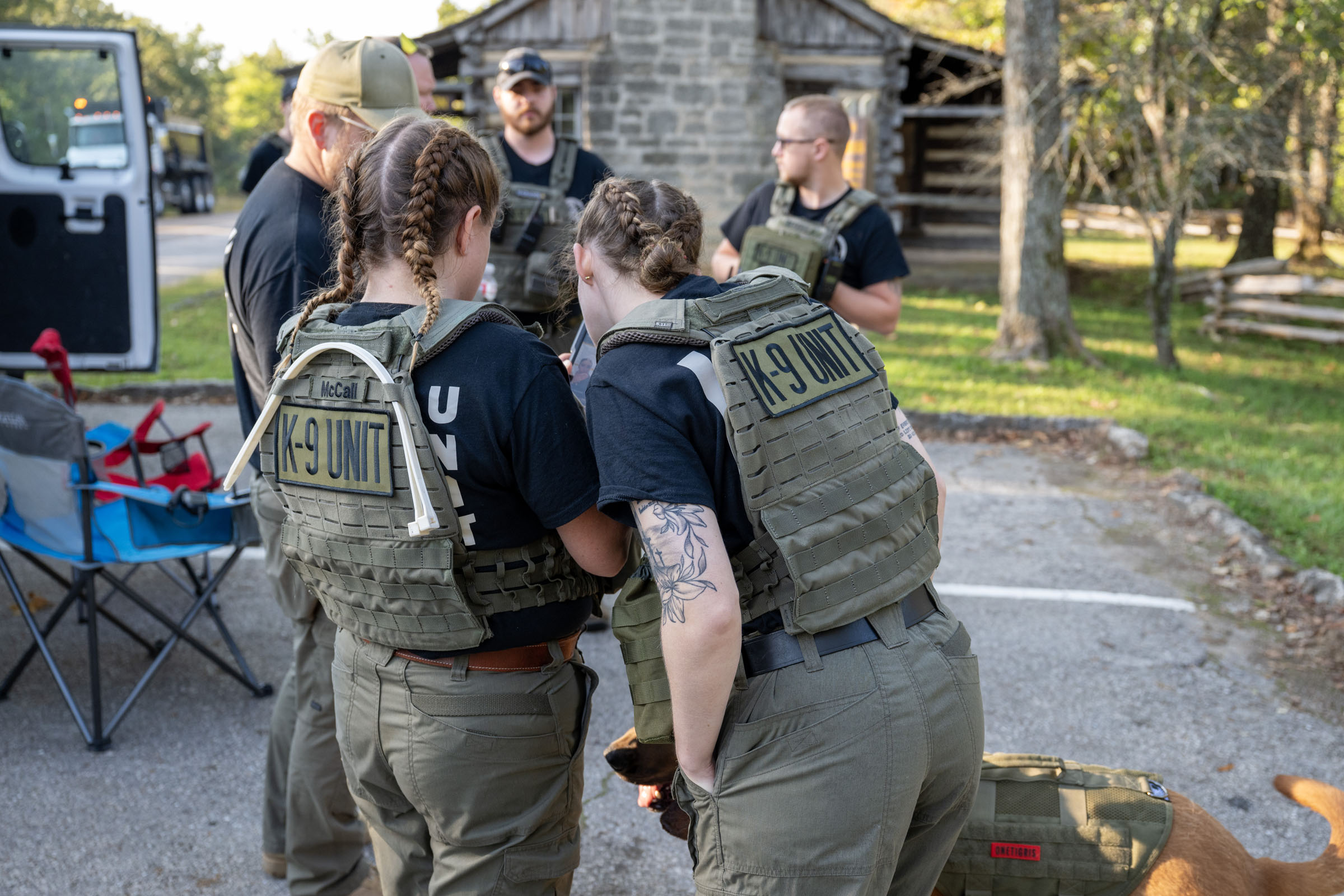
On Oct. 2, Miles anchored his team to victory at the Missouri Department of Corrections’ (MODOC) 18th Annual Tracking Dog Training Event at Camp Clover Point on the shores of Lake Ozark. The friendly but fierce competition featured all five MODOC dog teams: Algoa Correctional Center (ACC), Crossroads Correctional Center (CRCC), Farmington Correctional Center (FCC), Moberly Correctional Center (MCC) and NECC.
It works like this: Over two days, each dog team works a pair of one-mile courses — one at night and one in the morning — where “track layers” have dispersed scent two hours before start time. Track layers also place flags which, when captured, count for a one-minute reduction of the team’s “capture time” (when the dog finds the track layer). Teams must use a different dog for each course, and the team with the lowest cumulative capture time wins.
“Miles is a pup and still learning, so we’re never quite sure how he’ll perform,” said Josh Roberts, functional unit manager and NECC dog team handler. “He was doing a lot of air-scenting — sniffing with his nose in the air.”

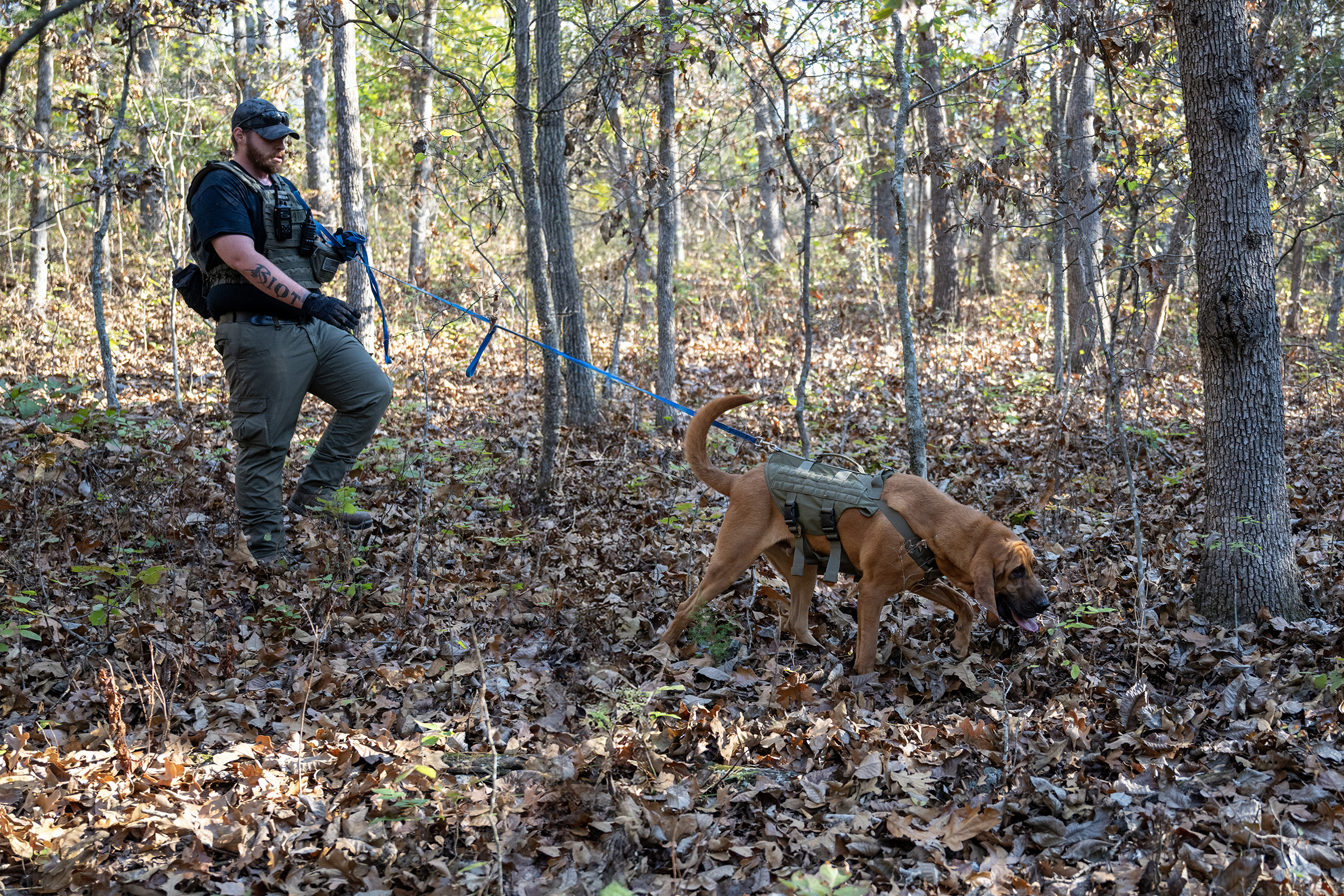
A few miles away, CRCC’s Hank, a bigger and possibly friendlier bloodhound than Miles, was roving through the thorny brush with his tail curled and his nose pointed upward — indicators that he was locked on the scent. As he picked up momentum and enthusiasm (stopping occasionally when nature called) his human teammates kept a brisk pace uphill, snapping branches and plowing through the Missouri wilderness in the dog’s wake.
Hank’s co-worker, Red, had given CRCC a sizable lead the night before with a 21-minute search time. But day two proved to be more of a challenge, and the NECC team overtook first place.
“Usually there’s some decision-making at the beginning of the route about whether the dog is on track,” said Colton Pickering, a sergeant at CRCC. “But last night Red got the scent right away and just took off.”

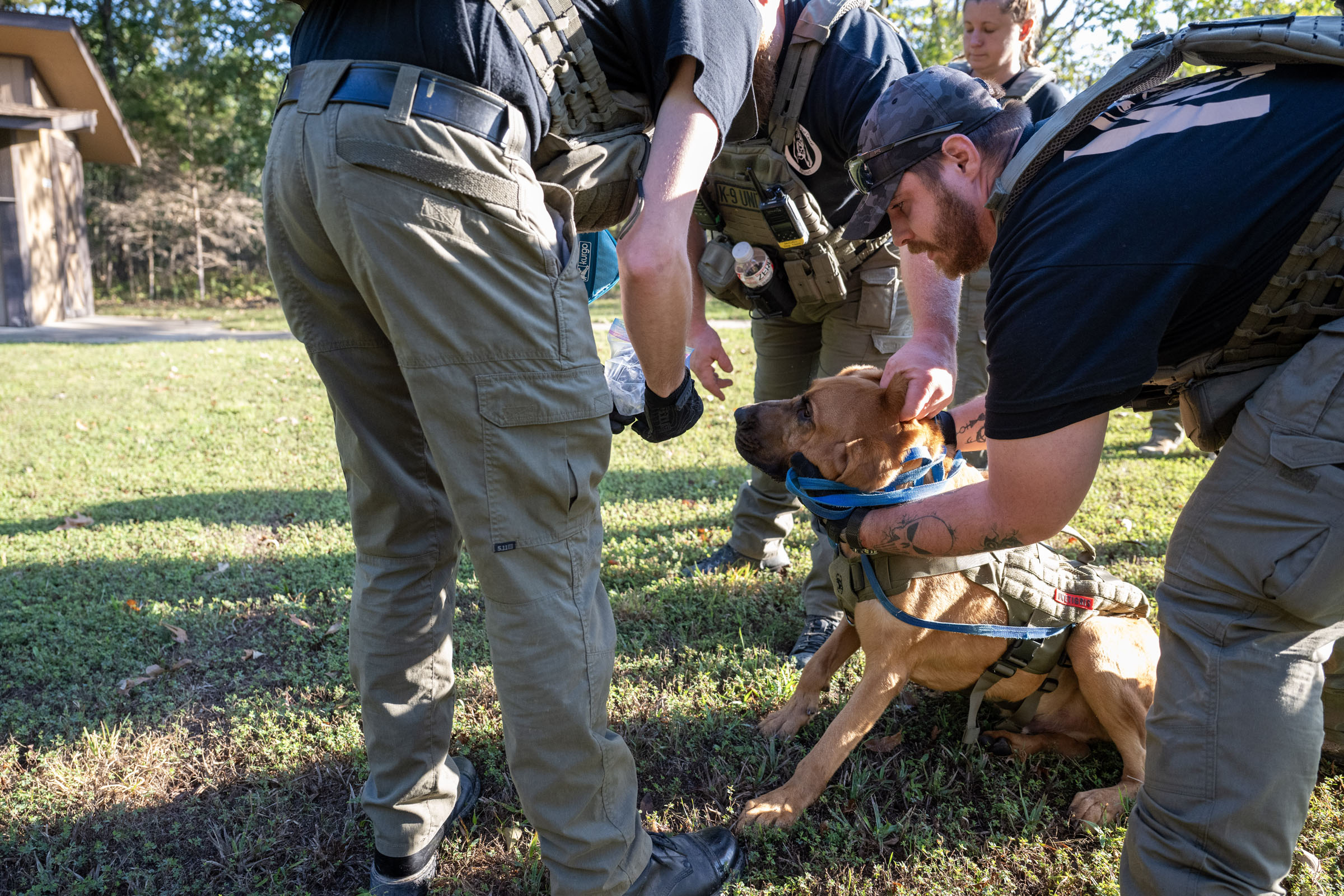
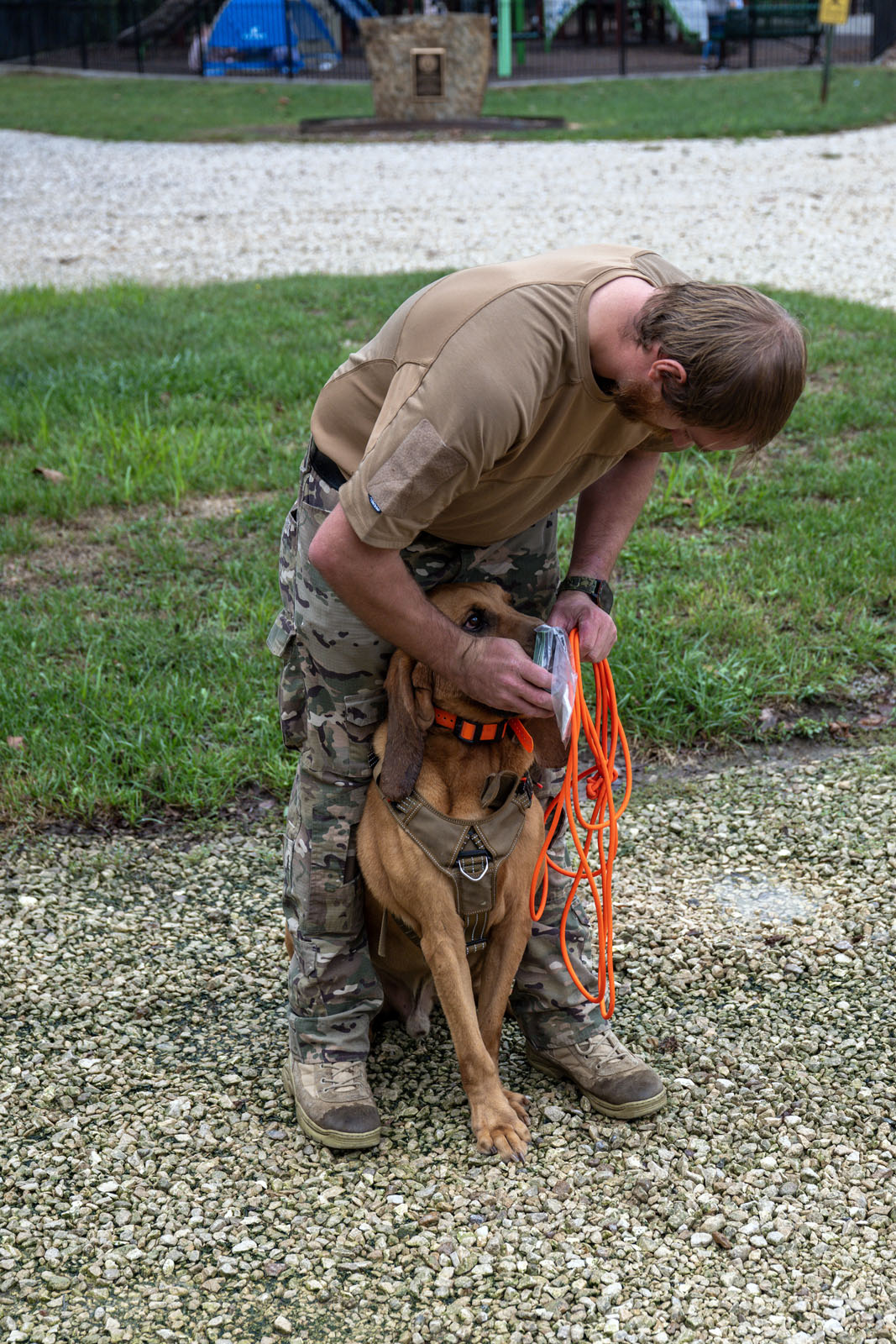
Before setting out on the search, the dog is given the identifying scent which is sealed in a Ziploc bag — usually an article of clothing worn by the target. Typically each dog is paired with only one handler (to cultivate a bond and maximize efficiency), while other team members follow behind.
“I’ve always been told ‘trust your dog,’ but it’s not so much about trusting your dog as it is knowing and reading your dog,” Roberts said. “If you can learn your dog’s habits and know if he’s on a track or not, it is way more important than trust.”
Scents of Purpose
Cody Trenkle, a 13-year-old boy in St. Francois County, was zipping around on his skateboard near Goose Creek Lake on July 27, when he tumbled down a 240-foot-deep ravine. He had been missing for more than three days when Daryl, a six-year-old bloodhound, and his FCC teammates set out on the search.
Daryl found the boy — who has since fully recovered from multiple injuries,extreme dehydration and exposure, requiring a month-long hospital stay — in a mere 21 minutes.
“When it’s so hot out, the scent can dissipate and do some weird things,” said Joseph Gillam, a lieutenant at FCC. “It was really thick vegetation and we sent in Daryl [having sniffed] the boy’s shoe. He stuck his nose in the weeds, went down about 10 feet, came back and stuck his nose in again.
“That’s when we knew we’d probably found Cody.”
The department maintains dog teams primarily to assist with security, searches and law enforcement operations across its prisons and facilities. Although they can be deployed when someone flees custody, they are more often used for interagency support and community missing-person searches. (Narcotics K9 work is contracted.)
Craig Crane, ACC warden and former dog team member, once participated in a search with U.S. Marshals who were tracking a suicidal Air Force veteran near Weston, Missouri.
“We tracked her to the Missouri River and my dog stopped, looked back at me and indicated she was in the water,” said Crane, who also helps coordinate the tracking dog competition. “They found her on the other side of the river after she swam across. She got the help she needed and recovered.”
Good Boys
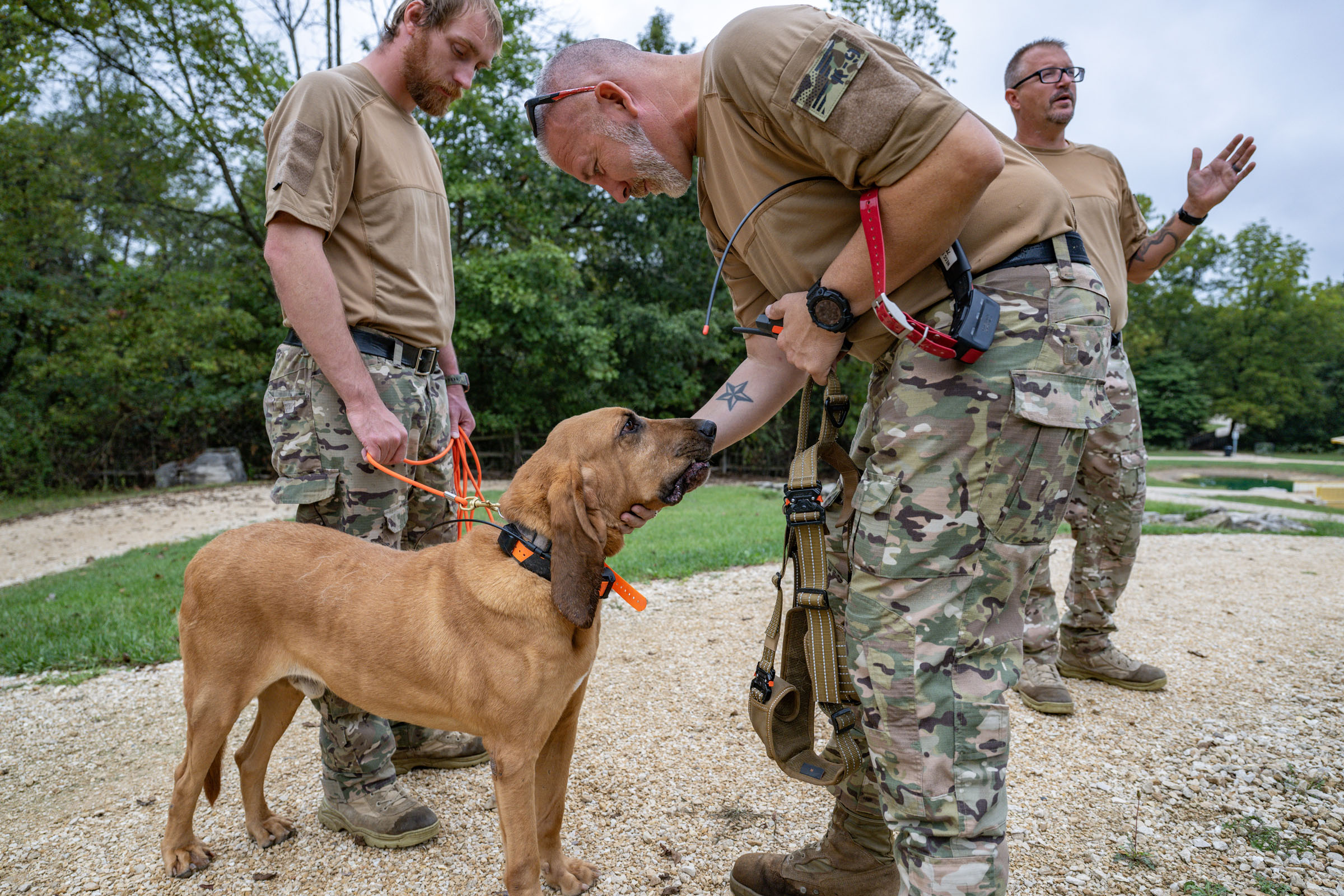
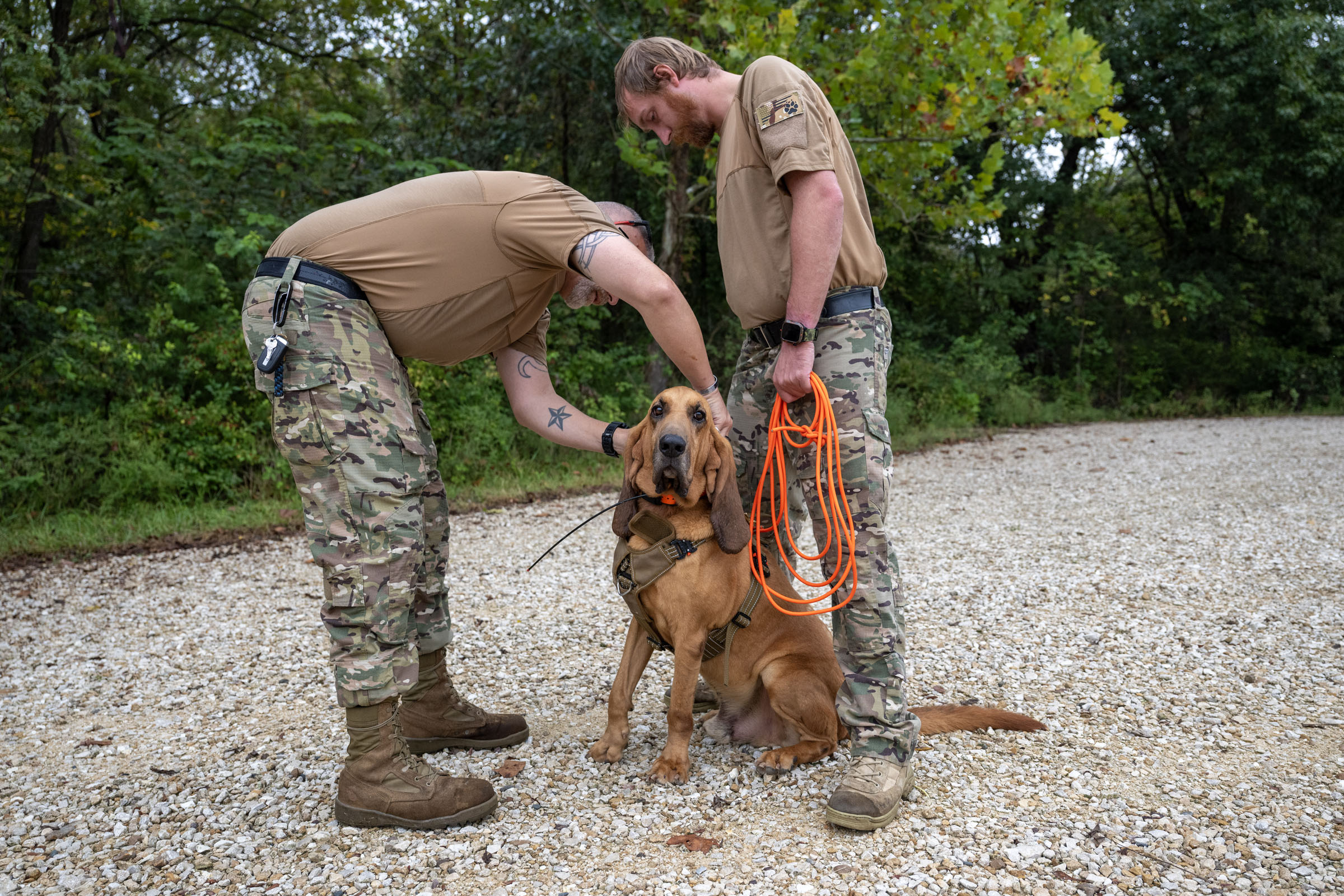
Back in Bowling Green, Missouri, Miles happily wags from person to person — snuffling fragrances of familiar colleagues and new acquaintances alike. The team is about to deploy on a brief training exercise around the 20-acre Henry Lay Sculpture Park, where the NECC Search & Rescue trailer is parked.
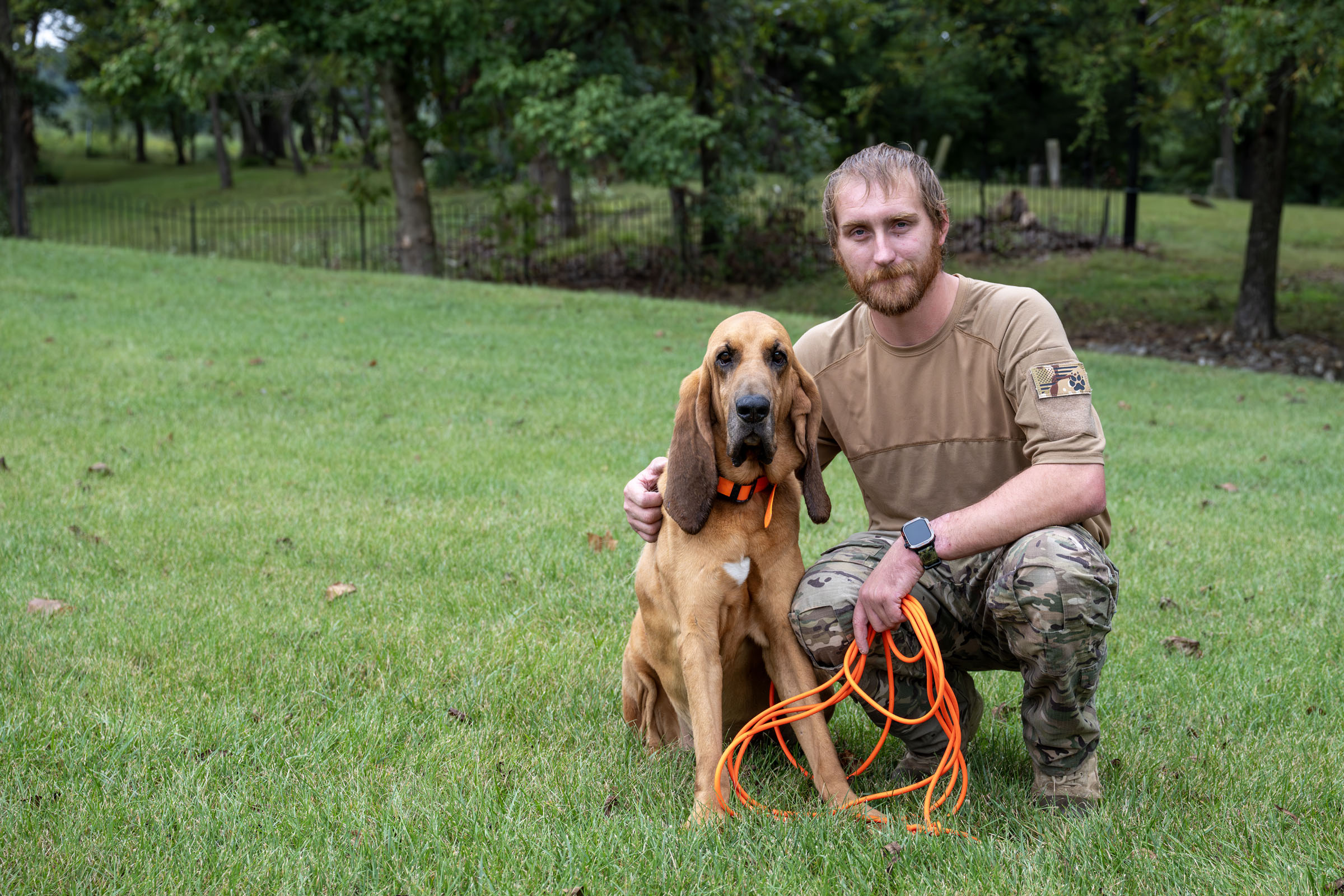
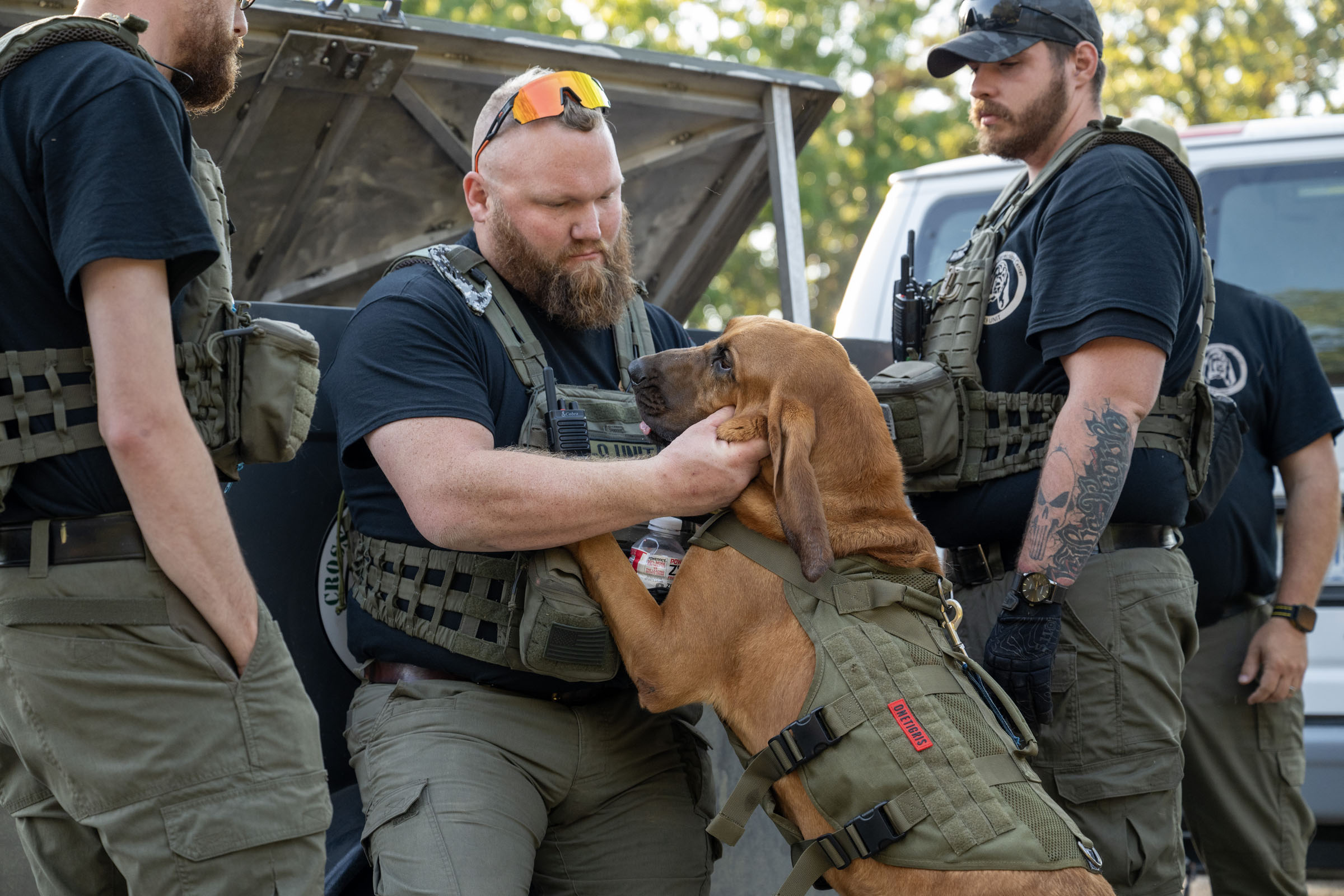
Miles poses for a grinning portrait with his handler Cody Purvis, NECC sergeant, before adorning his work vest and game face.

“I think maybe we look alike,” jokes Purvis, crouching next to his partner. “I’ve always had a bunch of dogs. I enjoy hanging out with them and working with them, and I like to be outside in the wilderness.”
The morning dew is still evaporating from the grass, giving a veteran like Miles a distinct advantage beyond his elite sense of smell. Bloodhounds have 230 million scent receptors compared to a human’s five million, and the ambient dampness helps hold aromas close to the ground.
Miles finds his target in less than 20 minutes, earning him more treats and vigorous head pets. It’s not a bad way to “make a living” — even if his payment comes in the form of long kennel naps and savory bowls of Diamond Premium Dog Food.
“Our team has a great camaraderie when we’re out there, and sometimes we don’t even need to talk because we all know our roles so well,” Woodhurst said. “It’s a great feeling to know you’re helping the community and helping a family. Even if it’s a sad search outcome, at least you’re helping people get closure more quickly.
“And when you find someone’s loved one and they’re OK, it’s the best feeling in the world.”