
Community Supervision Centers redirect lives and help Missourians blaze a trail to reentry.
Story by Marcus Wilkins. Photos by Garry Brix.
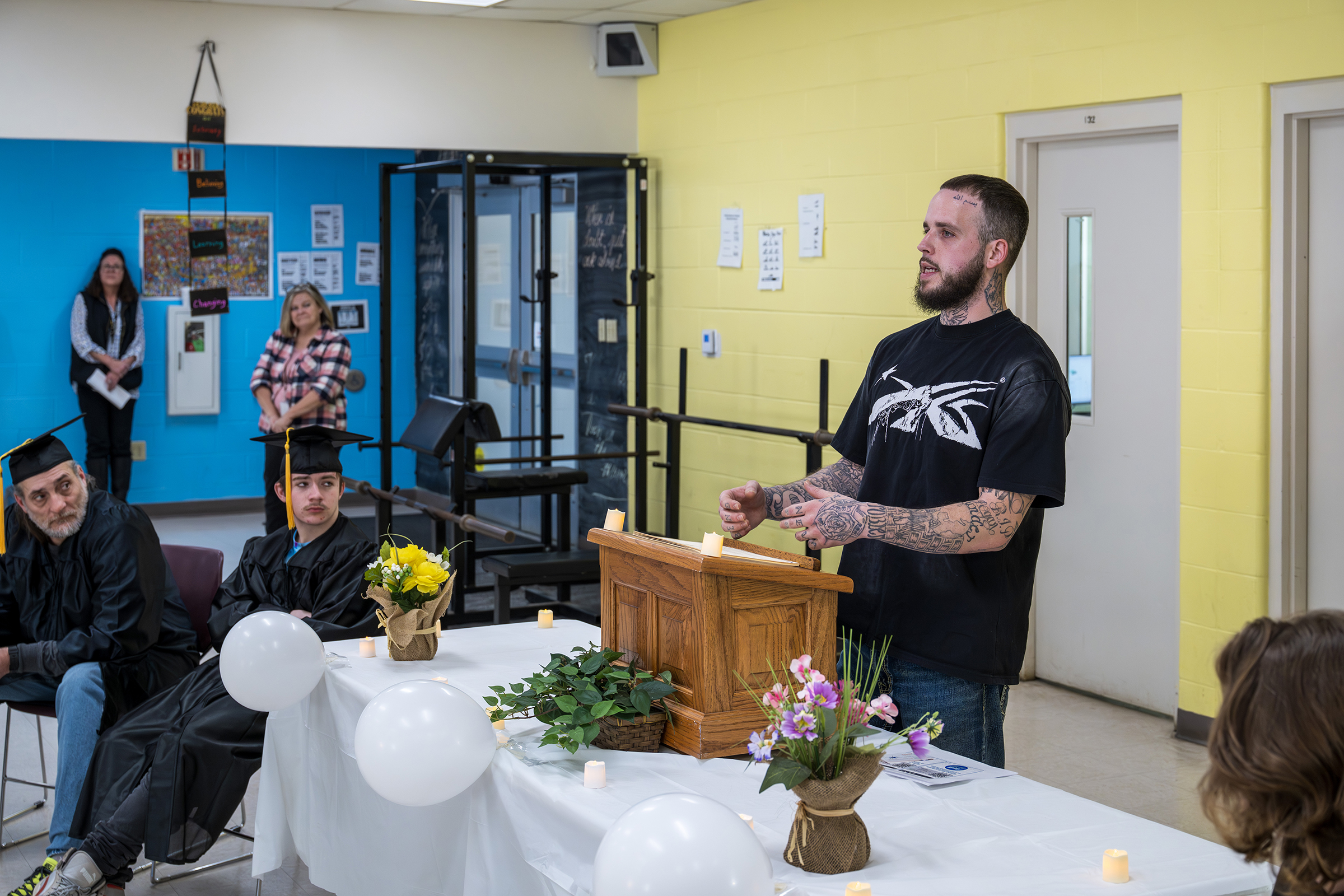
Phillip Roette approached the lectern with the confidence of a man who had already confronted life’s worst demons. His journey had carried him through loss, consequences, pain and, ultimately, sobriety — a gauntlet that demanded courage and a little help along the way.
So, when he addressed the latest graduating class gathered in the multipurpose room of the Community Supervision Center (CSC) in Hannibal (Probation & Parole District 3), he did so with gratitude and a desire to pay it forward.
“If I prayed for wealth, God would never just drop money on me,” said Roette, a 2024 graduate of the CSC program. “He put me in situations to prepare me and teach me how to handle things — but you have to put in the footwork.”
Today, Roette is presenting the 14 graduates — some sporting caps and gowns — an opportunity: jobs at PPG, a paint factory outside Hannibal where he works as a supervisor. Roette has even offered to drive workers to and from the plant, which manufactures highway paint used across the Midwest.
“You’ve got to want better for yourself, and when you see an opportunity, take it,” Roette said. “The things I learned at the CSC changed my life, but it’s just the starting point.”
Operated by the Division of Probation & Parole, CSCs house Missourians on state supervision who recently have been released from prison or at risk of going to prison, helping them develop the skills they need to succeed on their own. Graduates complete a demanding 90- to 120-day program that requires them to remain drug- and alcohol-free, attend assessments and group sessions, complete personal-growth classes, and follow facility rules.

The Hannibal CSC has a capacity of 37 clients and includes beds, showers, recreational space, computers for building résumés and applying for jobs, and phones to stay connected with loved ones. Perhaps most important, the doors remain unlocked. The elective program is designed to give residents the freedom — and responsibility — to choose a different path.
It worked for Roette.
“I knew the CSC was a place where I wouldn’t have to worry about where I was going to lay my head at night,” he said. “It gave me time to build a foundation. If I could do that, I knew it would kickstart a better life as a citizen. And the people here excel at helping with that.”
Lighting the Way

Kristen Gannan’s sunny disposition might be her not-so-secret weapon. A probation and parole officer at the CSC in St. Joseph (District 1), Gannan routinely hears about clients’ darkest chapters — abuse, addiction, broken families and criminal behavior.
Yet she helps them identify their strengths and build reentry strategies in part because she understands those struggles firsthand.
“I guess you could call me the white sheep of my family,” said Gannan, who also works part time as a corrections officer at Western Reception, Diagnostic and Correctional Center (WRDCC) just down the hill from the CSC. “I had a very difficult childhood, and my life easily could have ended up like many of our clients.’ So, when you see them make progress, it’s incredibly rewarding.”
Today, Gannan is helping Taylor Burgess realize that progress. The 29-year-old from Keokuk, Iowa, whose methamphetamine addiction and reckless behavior led to a 2024 Missouri prison sentence, chose the CSC program to help rebuild his life.
“My dad has been in prison since I was 6, and my mom stopped talking to me until I sobered up,” Burgess said. “At first I planned to go back to Iowa, but I needed a stable place like this to get my head straight and make a plan.”
Burgess had just returned from the library — one of many resources available to CSC residents through round-trip shuttle service. The facility also maintains a Restorative Justice garden featuring a greenhouse, pumpkins, tomatoes, apple trees, mulberries and blackberries. The garden yields tons of produce each year for donation to local agencies.
Fishing trips, nature hikes and Thursday night cooking classes — the latter led by CSC District 1 Administrator Jamie DuChaine — also fill the calendar.
“I love seeing individuals go from their lowest point to realizing they still have a future,” said DuChaine, a 22-year Department of Corrections veteran. “We provide the resources, but the transformation comes from them. Who they are today is not who they have to be tomorrow.”
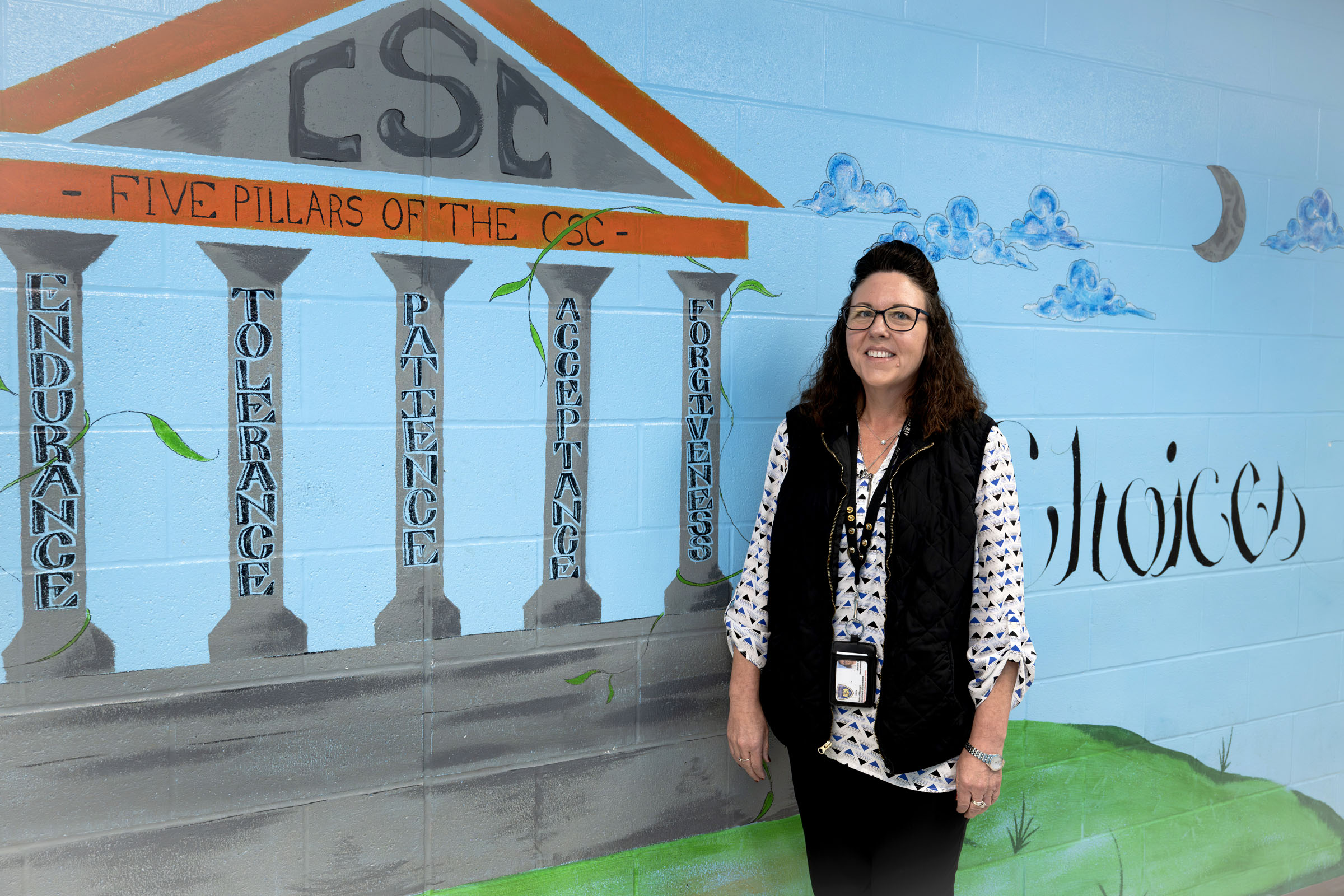
of a mural depicting the CSC’s guiding “pillars.
For Burgess, the CSC’s personal-development courses have had the greatest impact. Classes in financial literacy, peer relationships, responsible thinking and prosocial living help graduates build the foundation for those critical first steps after release.
“Back in the day, I didn’t care what anyone thought,” Burgess said. “I ignored people trying to give me good advice. But this program has changed me. The people at the CSC are here for you — and they’re still here for you after you leave.”
Time and Tenacity
Back at the Hannibal ceremony, CSC District 3 Administrator Roxane Golian begins her commencement address with a question.
“Why did the man throw his clock out the window?” she asks.
The crowd lobs a few half-serious guesses.
“To waste time!”
“Because it kept ticking him off!”
“All that matters is now!”
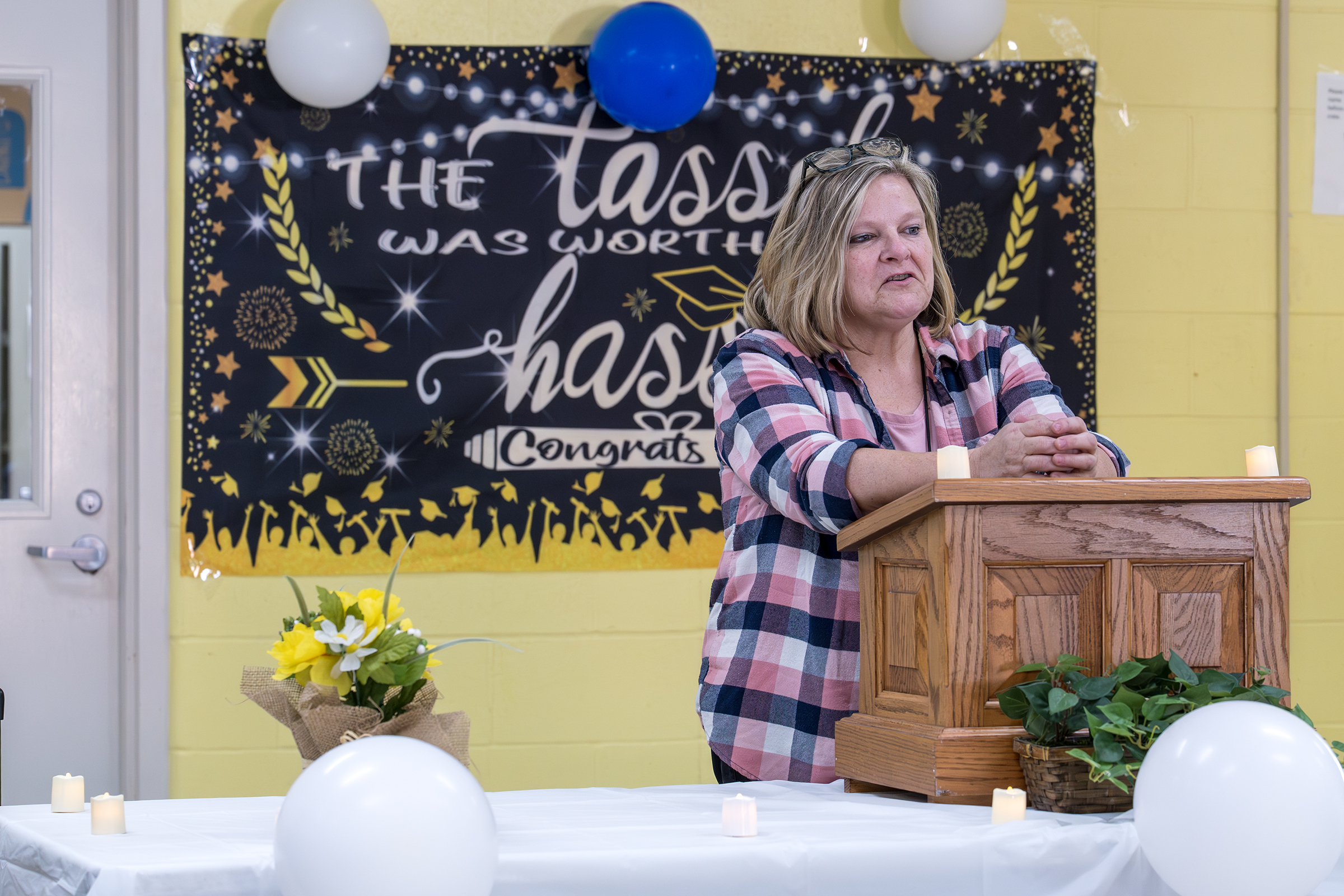
heartfelt guidance with the graduates.
“Because he wanted to see time fly,” Golian replies with a laugh before shifting to a more serious tone. “And here’s some wisdom a man once told me growing up: Time cannot be replaced. You cannot rewind it. The decisions you make take your time. Don’t wish away the future as time flies by as quickly as the turn of a page.”
The graduates nod as the lighthearted moment turns reflective. Some may accept Roette’s job offer at the paint factory. Others already have plans waiting at home.
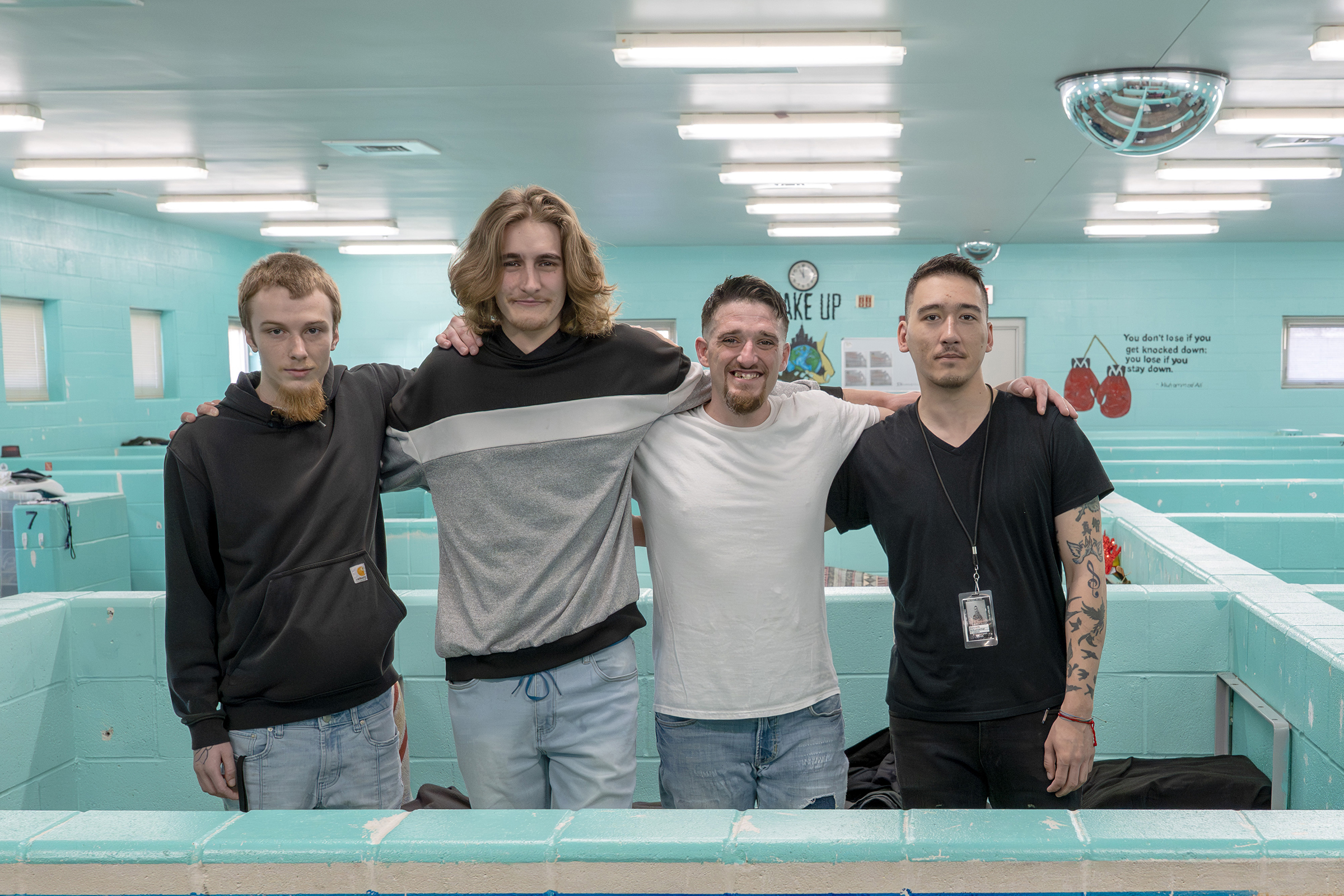
Kyle Hurst, for example, will return to Dixon, where he plans to work at a convenience store while starting a new chapter with his wife and eight-month-old son.
“This place really teaches you how to use your time wisely and make the most of your downtime,” Hurst said. “The staff also help you with your self-talk — like Ms. Penny [Roan, institutional activity coordinator], who kind of mothers us. She’s always saying, ‘Get that negative talk out of here — we don’t need that.’”

optimism during his speech to
classmates and loved ones.
Roan’s nurturing approach comes in part from experience. She has supported her own son through recovery, and when she sees clients beginning to drift off track, she gently steers them back.
“I firmly believe their success is everybody’s success,” Roan said. “If you treat people like human beings, give them opportunities and let them know you’re behind them, they can step off the treadmill they’ve been stuck on.”
As cake is passed around and the celebration winds down, graduate Adrian Wilde outlines his next steps with a confident gleam.
“I just finished my first semester online for my AI engineering degree, and I got a 4.0!” Wilde said. “When I walked through these doors, the people here treated me like the person I wanted to be — the person I am now — not the person I used to be.”
Currently the Missouri Department of Corrections runs six community supervision centers – in St. Joseph, Hannibal, Farmington, Kennett, Poplar Bluff and, exclusively for women, Fulton. Planning is underway for a seventh in Joplin.