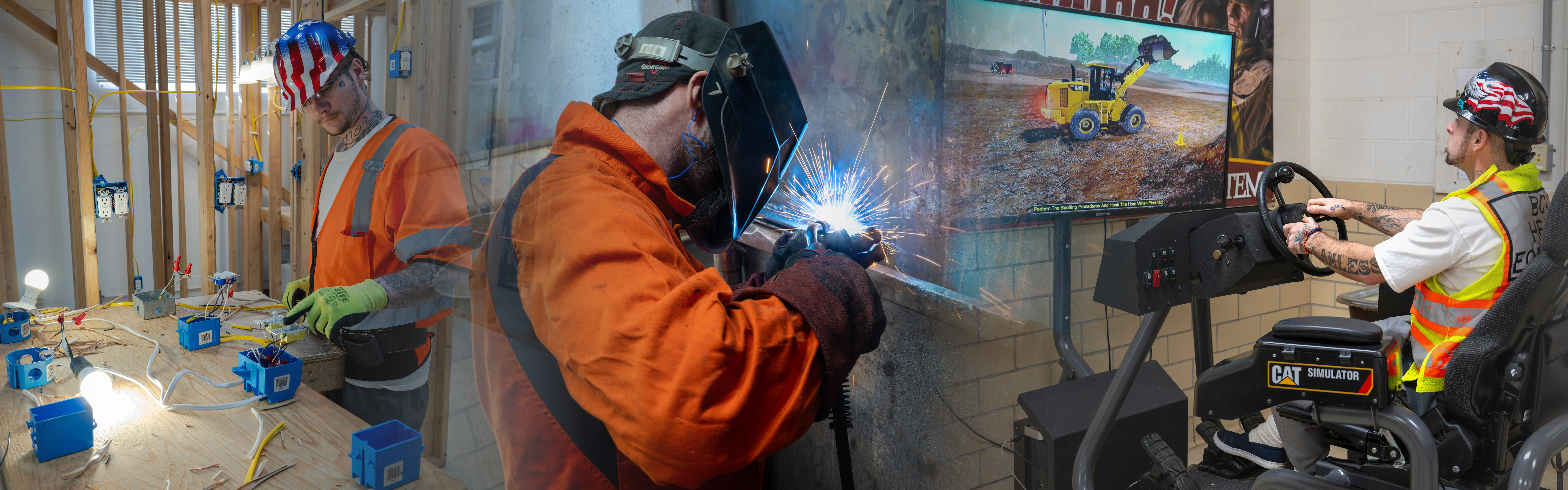
Boonville Correctional Center staff are helping residents gain life-altering career skills.
Story by Marcus Wilkins. Photos by Garry Brix.
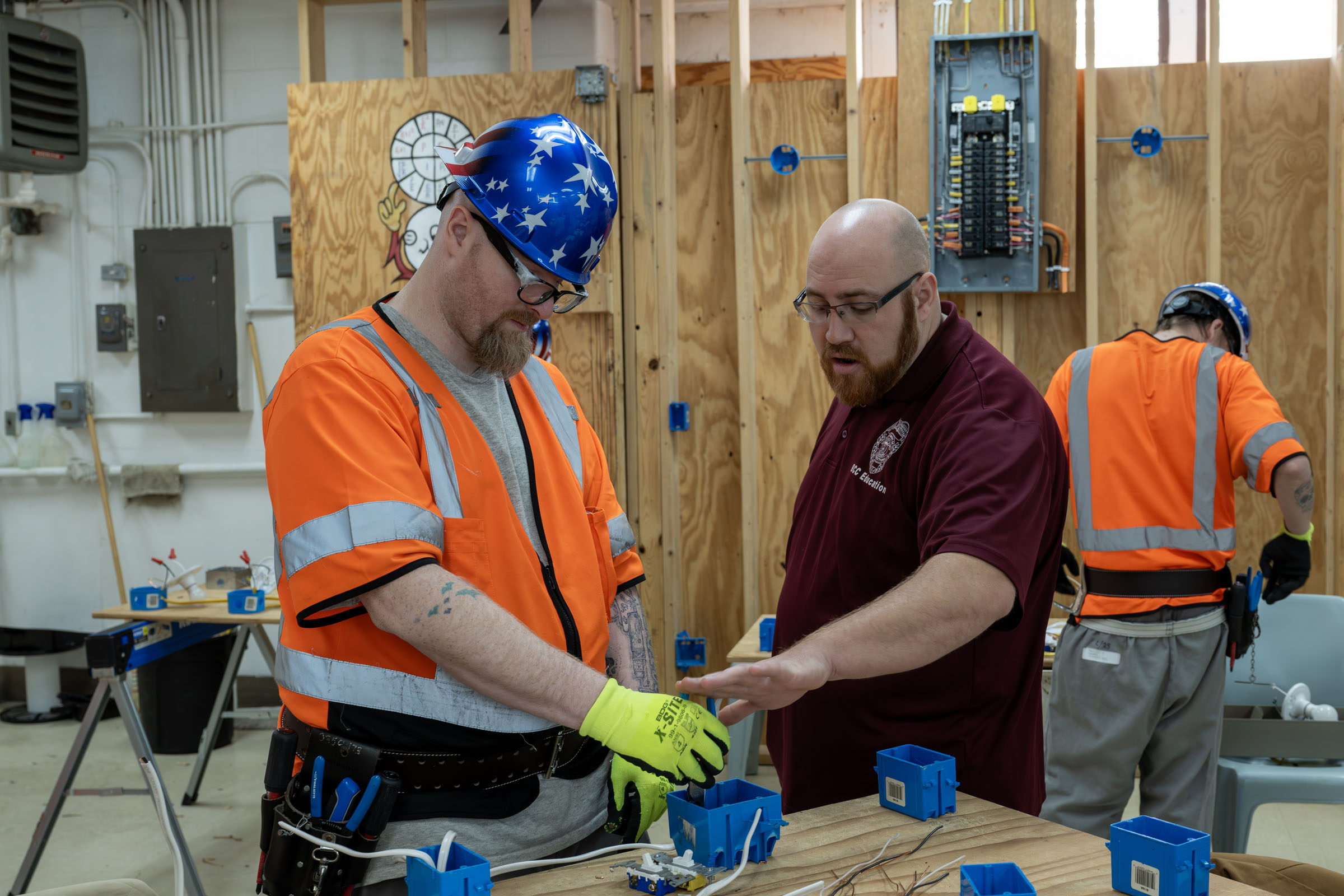
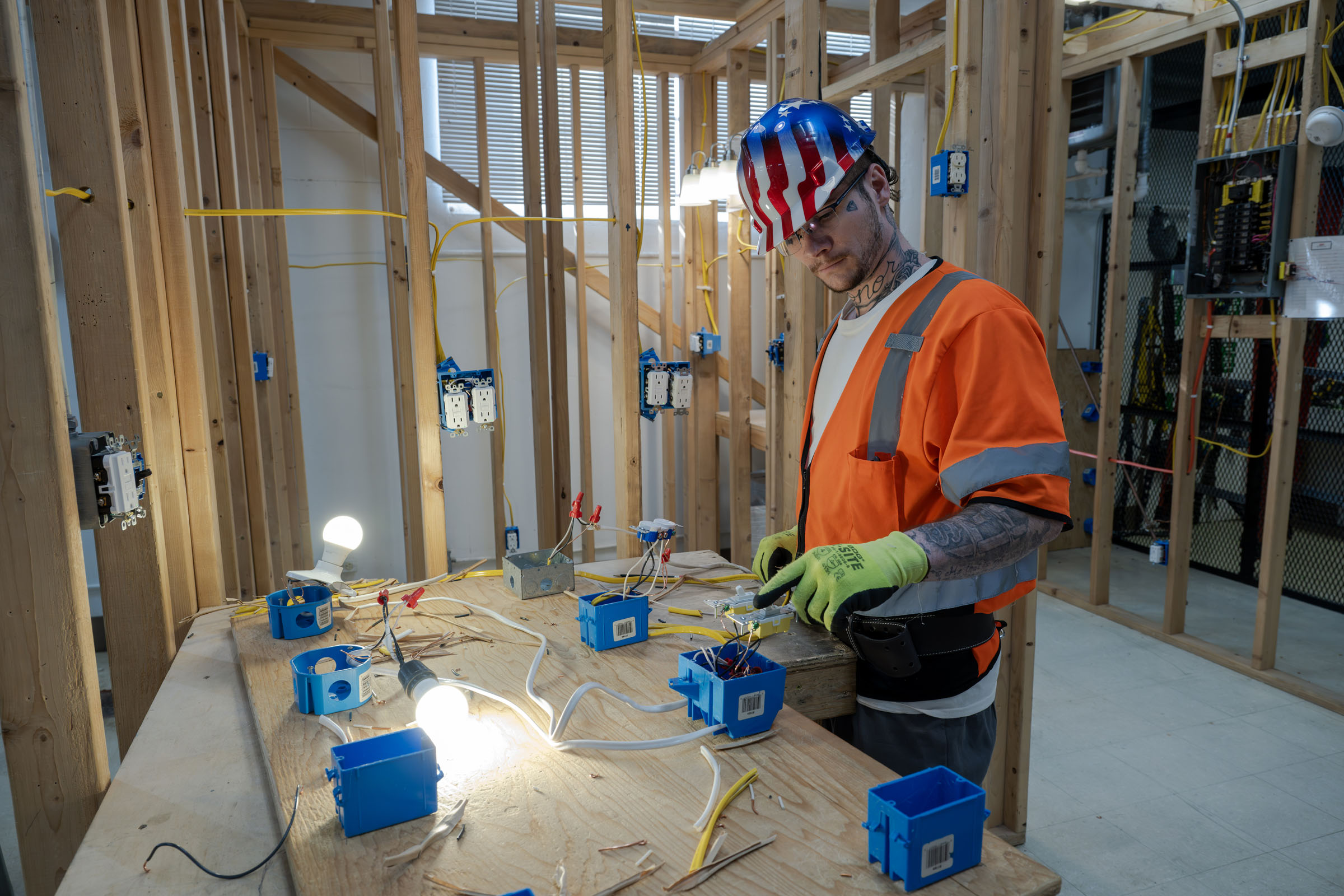
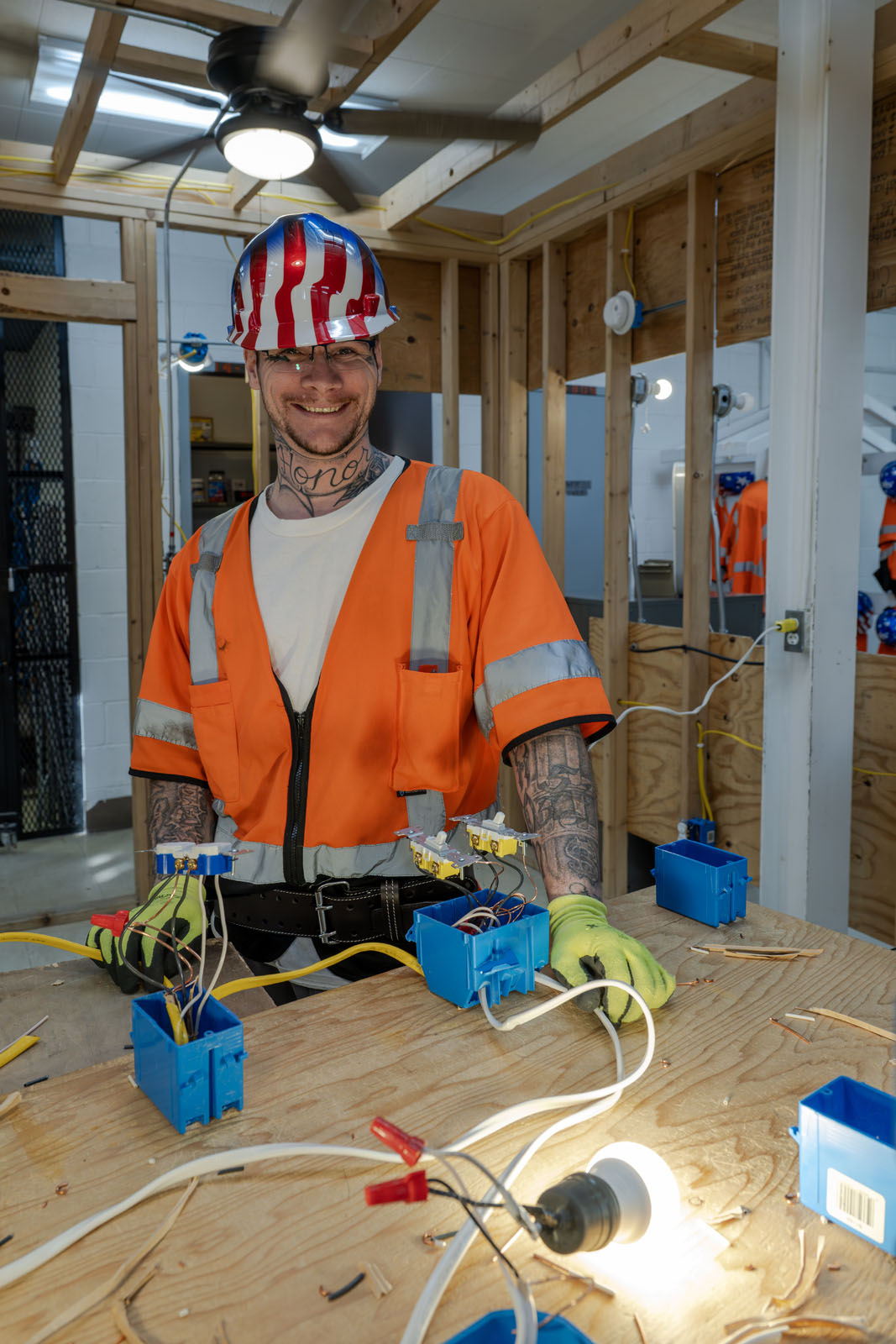
Andrew Welch’s electrician skills are inspiringly transferrable to his role as a vocational educational instructor at the Boonville Correctional Center (BCC). Every day in the classroom, he acts as a conduit of positive energy, helping residents rewire their thinking and jolt their self-esteem.

practices in a mock-apartment frame on site.
They might even experience that elusive “lightbulb” moment.
“I’ve had students start out not knowing ‘righty-tighty, lefty-loosey,’ unable to make connections,” said Welch, who teaches the electrical wiring technology course at BCC. “But as we move through the skills and they realize the opportunity in front of them, they have this mentality change — which affects their behavior and their motivation in the class.”
Electrical wiring is one of four trade courses made available by the Division of Rehabilitative Services (DORS) team at BCC, where qualified residents can also complete classes in heavy equipment operations, basic welding and manufacturing technology.
Today, most of the students are working on “breadboards” — reusable, plastic platforms for making simple household circuits. Off to the side, a handful of “lucky ones” are toiling away on a 300-question math test — with no calculator.
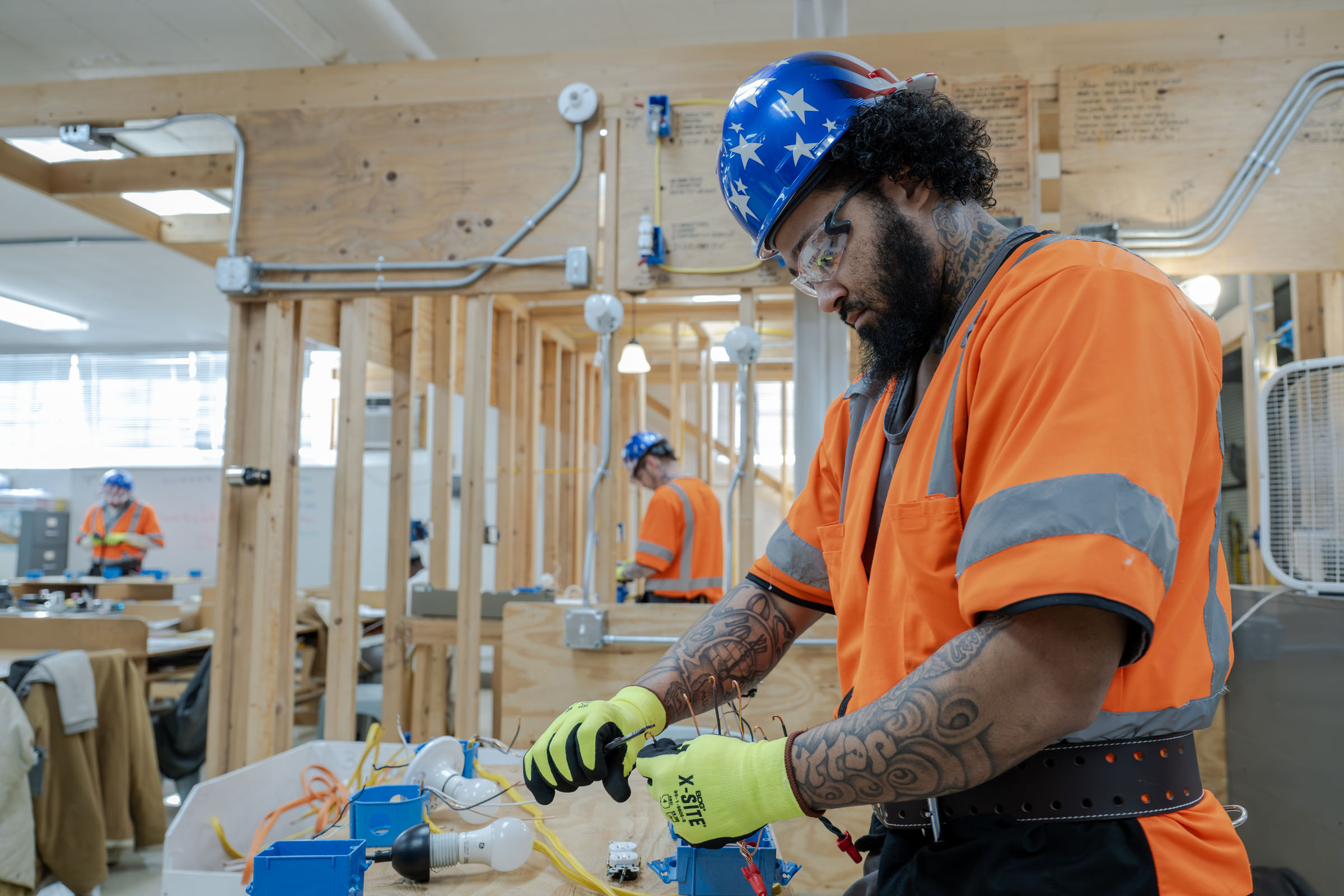
and exams that test students’ skills at math — which is
essential in electrical work.
“There is a lot of math in electrical work,” Welch said. “You have to be comfortable with the mathematical processes because if you’re not, even if you have a calculator, you’ll get the wrong answer.”
Completion of the hands-on training nets the students certification from the National Center for Construction Education and Research (NCCER) and a leg up on a career once they embark on their reentry journey. Other career and technical training programs offered throughout various Missouri Department of Corrections institutions include automotive mechanics, computer technology, building trades (such as carpentry and plumbing), cosmetology, culinary arts, nursing assistance and tattooing.
“I’ve found a new passion doing this work, and I’ve got a baby boy out there, so I’ll be able to pass this on to him,” said Stacey Smith, BCC resident from Kennett, Missouri. “Before, I was probably just going to go back out there to the streets. But now I have an actual plan.”
Grading and Building

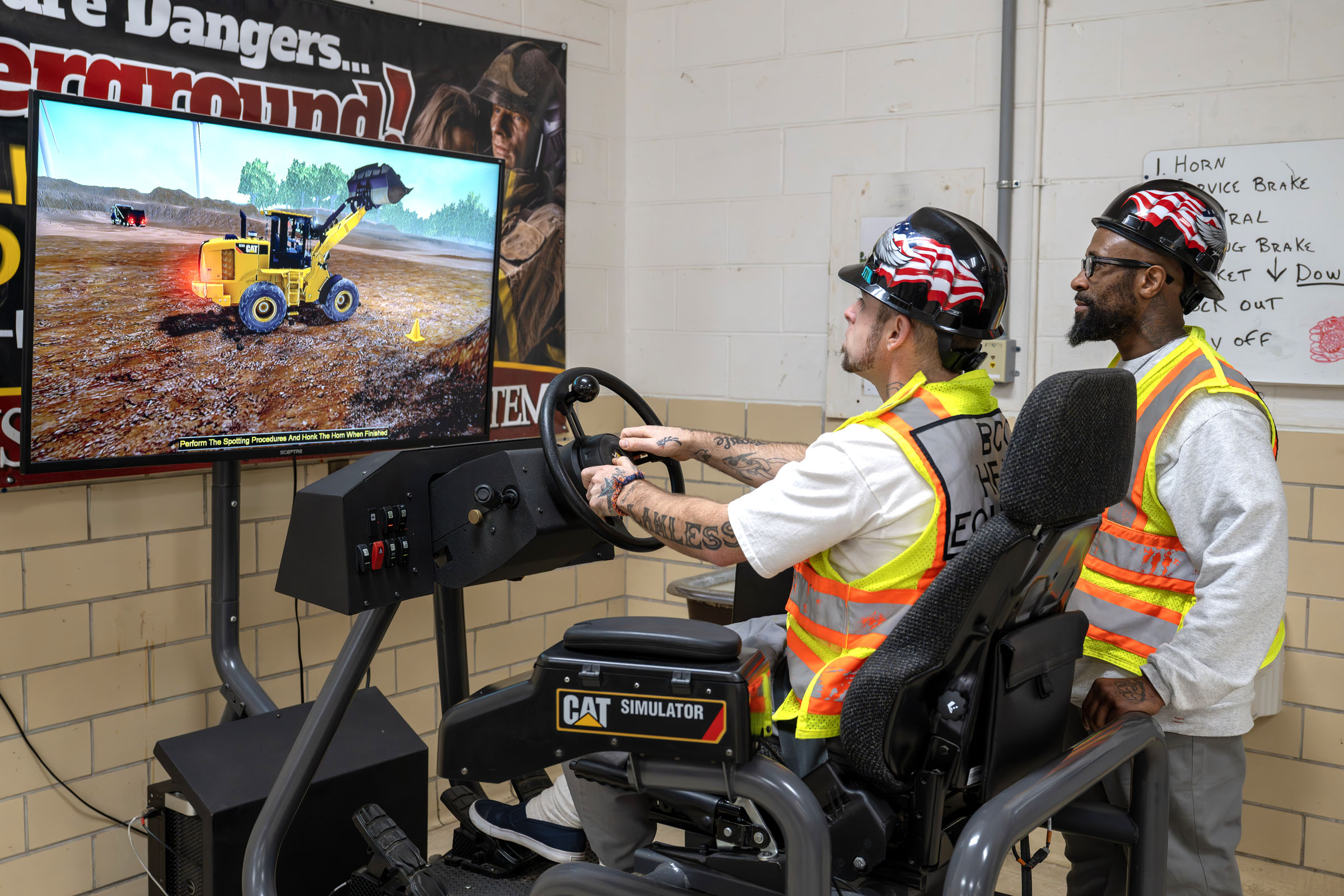
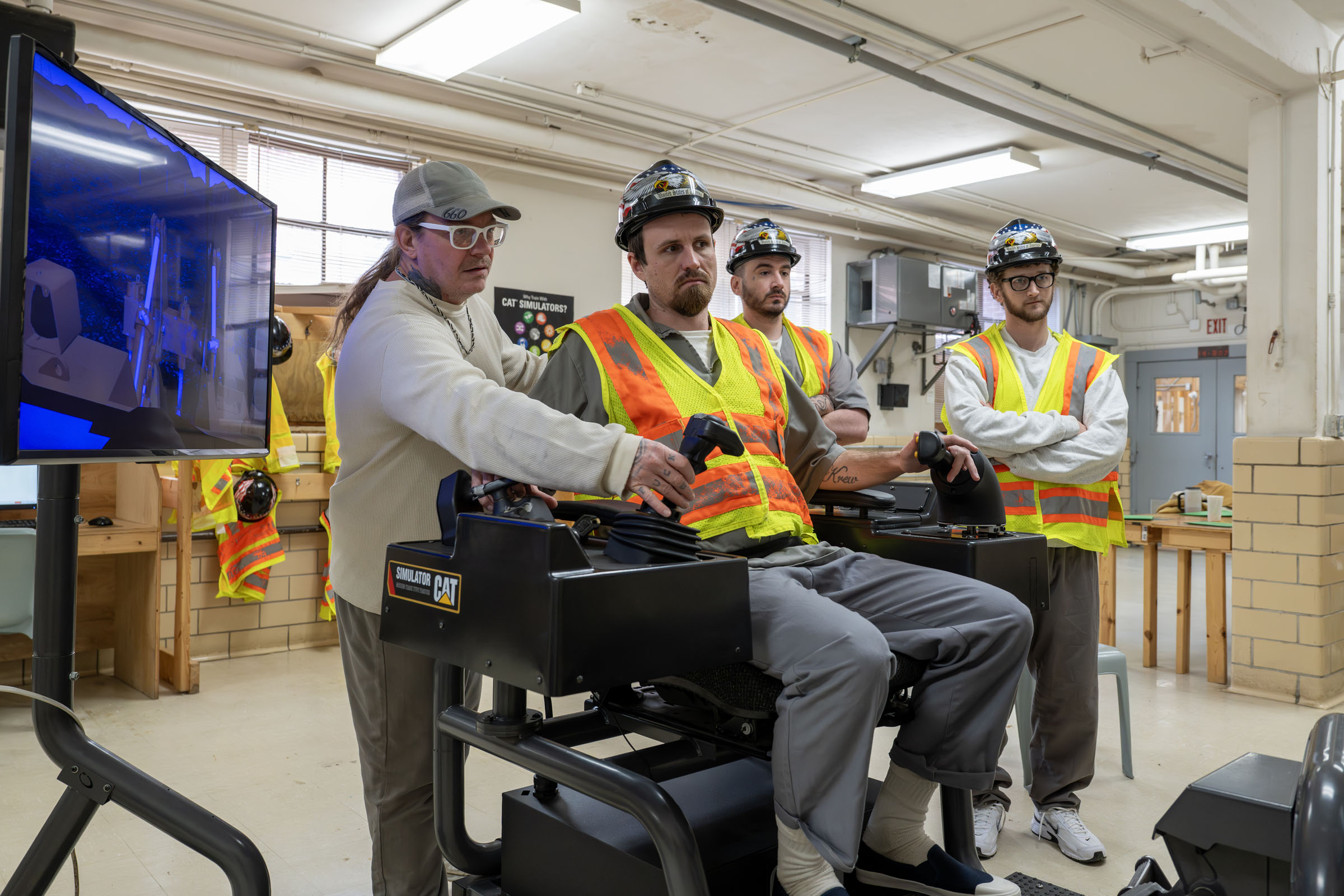
Around the corner, the telltale beeping of a skid loader in reverse echoes through the concrete classroom. The machine’s operator is attempting to deposit the payload into a dump truck — a frustrating trial-and-error session helped by an encouraging classmate serving as his wingman.
Of course, it’s not an actual construction vehicle but, rather, one of three Caterpillar virtual training simulators. The
high-tech machines feature 55-inch HD screens and onboard control systems identical to the real equipment.
“We teach them employability skills and try to treat everything like an actual job site,” said Tim Widner, the vocational educational instructor for the heavy equipment operations course. “You have to show up on time, leave at a certain time and wear your hardhat and reflective vest at all times.”
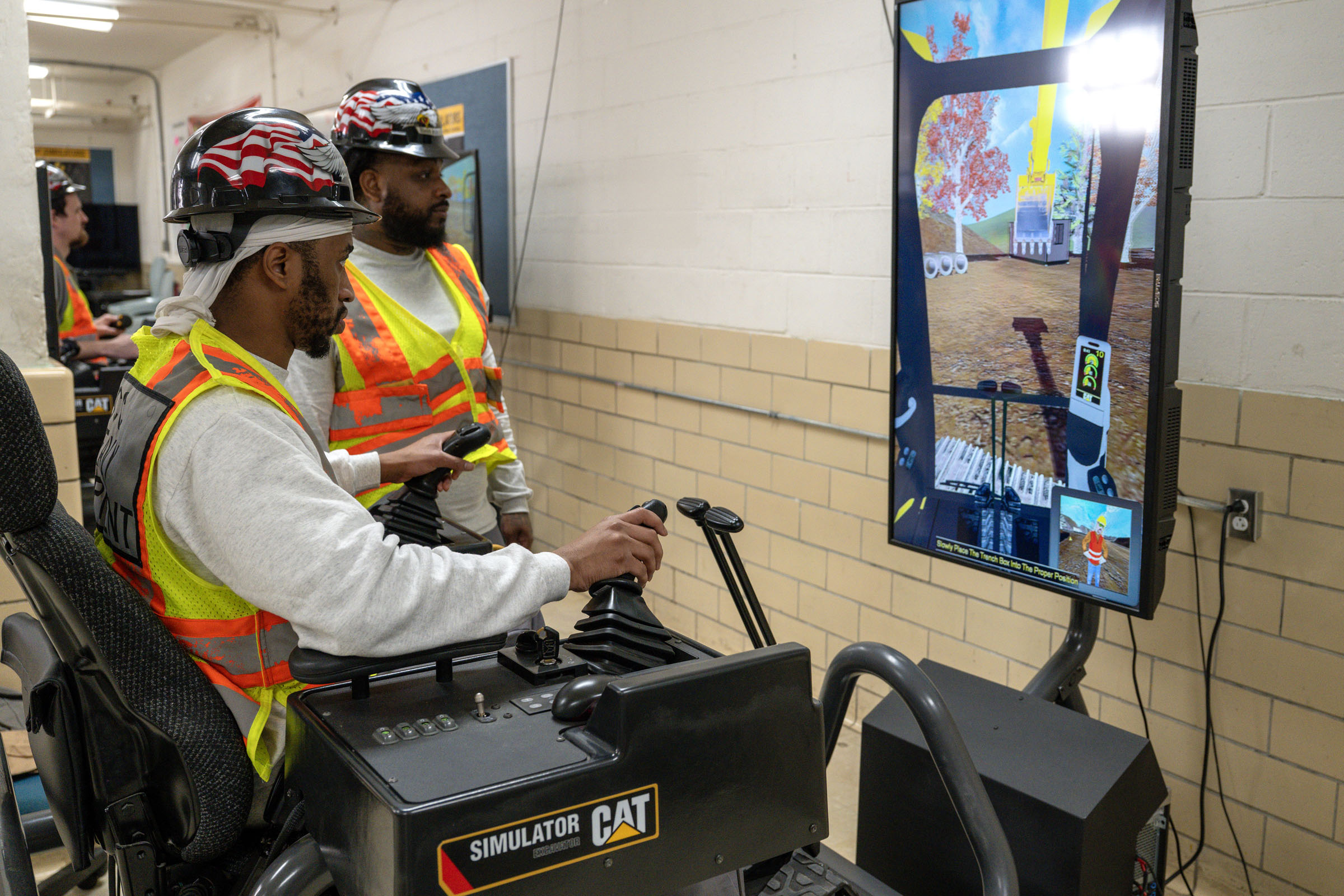
obtain their certification and complete sentencing.
The simulators display lifelike, cockpit-perspective graphics and teach dozens of skill-building scenarios, beginning with simple vehicle inspections to ensure that fluid- and pressure-levels are nominal. Students learn foundational operations — such as navigating obstacles and moving material — before graduating to more advanced exercises that include setting trench depth and grading precision.
Local construction companies — including Emery Sapp & Sons in Columbia and Capital in Jefferson City — have
hired several program graduates who have gone on to reentry success.
“I already have my commercial driver’s license, so with this training I’ll also have the option of pursuing heavy equipment,” said Justin Pritchett, BCC resident. “The simulator does a good job familiarizing you with the controls, which every day gives you more and more confidence — and hope.”
Molding Mettle

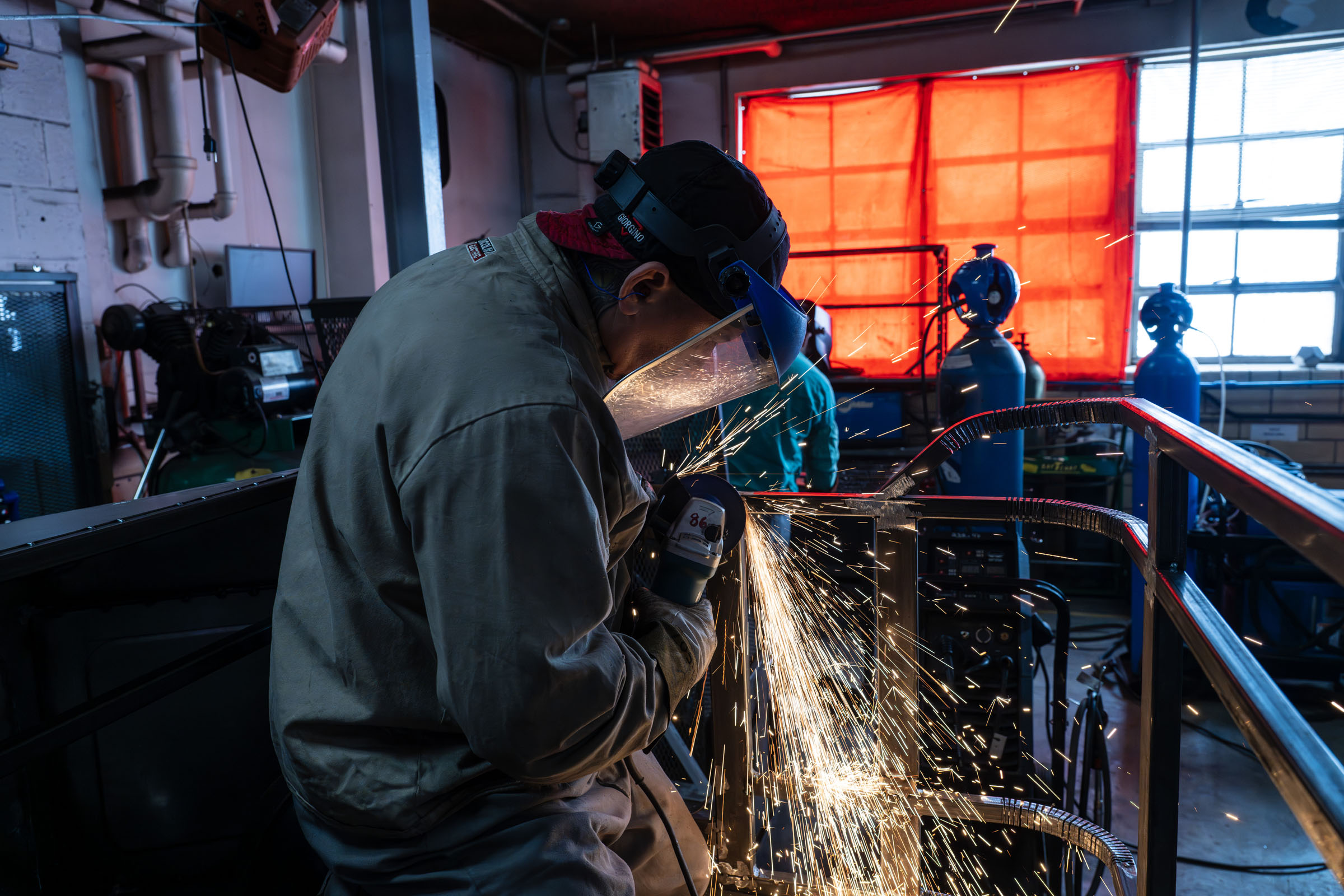
From his perch atop what looks like metal scaffolding, a shower of bright purple sparks reflects off the face shield of Roy Hernandez’s welding mask. He is fine-grinding the joints on the shell of a “rat rod” — a custom designed hot rod intentionally made to look weathered.
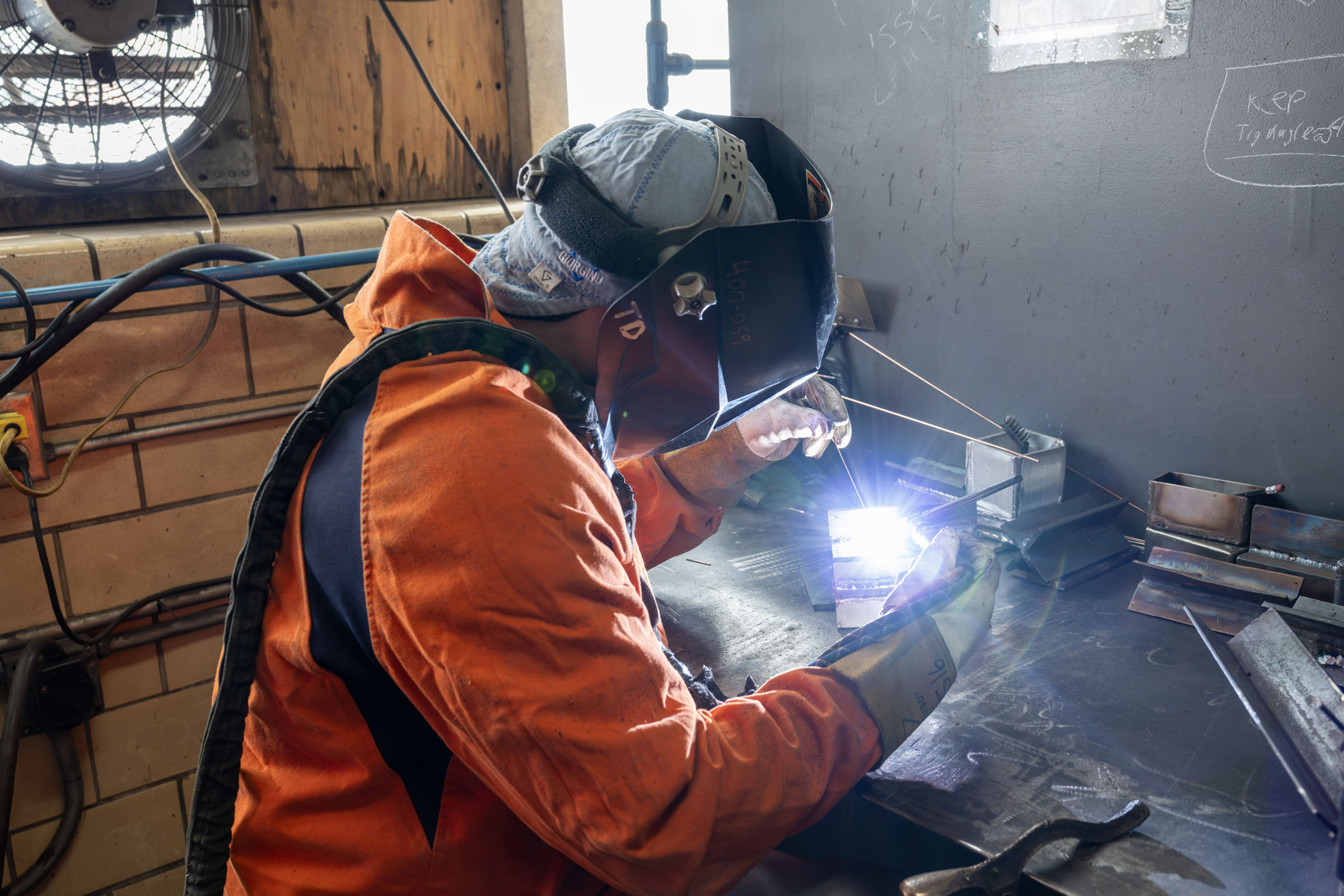
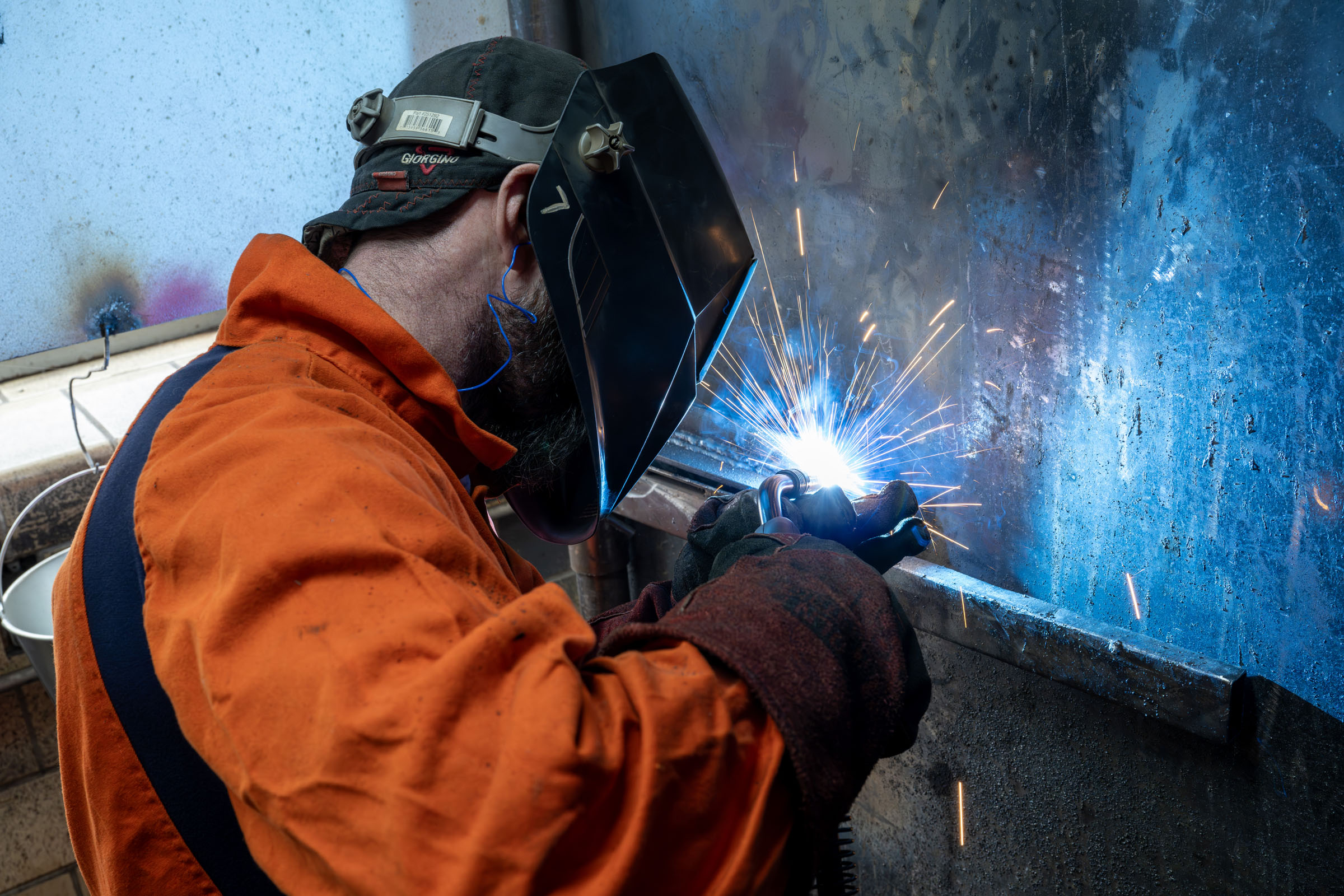
arc welding process that uses a non-consumable
tungsten electrode and shielding gas to create
strong, clean welds, often requiring a
manually fed filler rod.
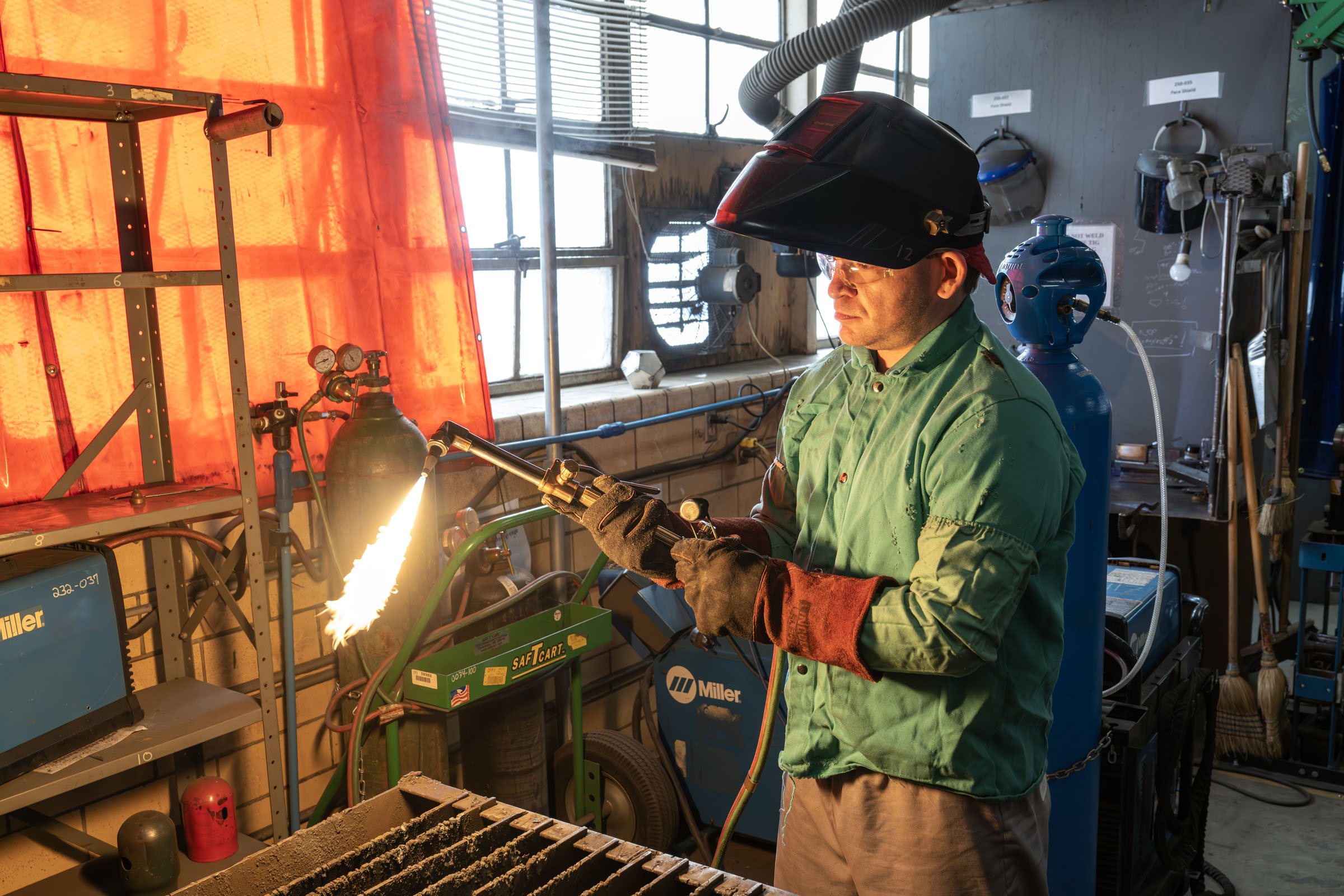
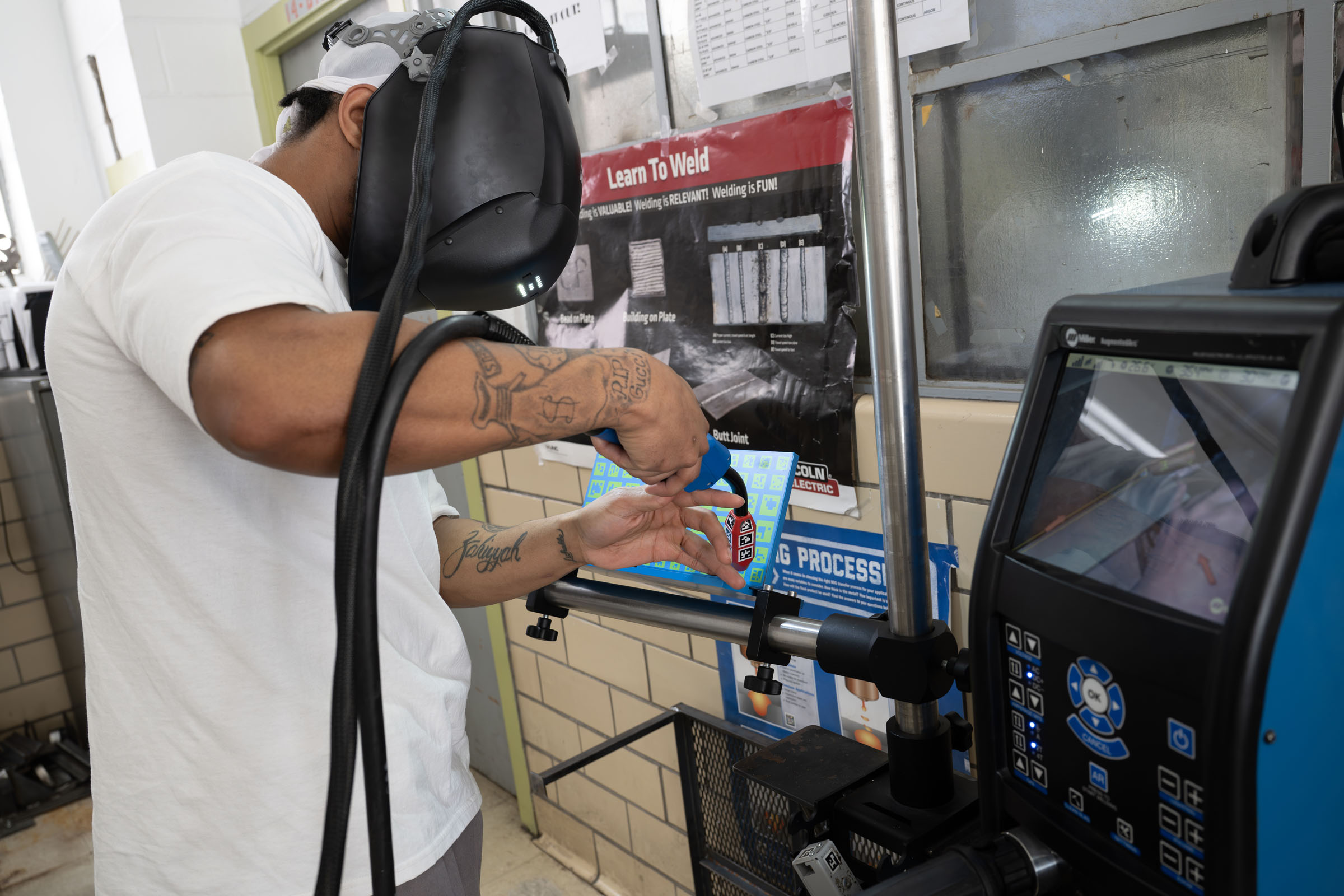
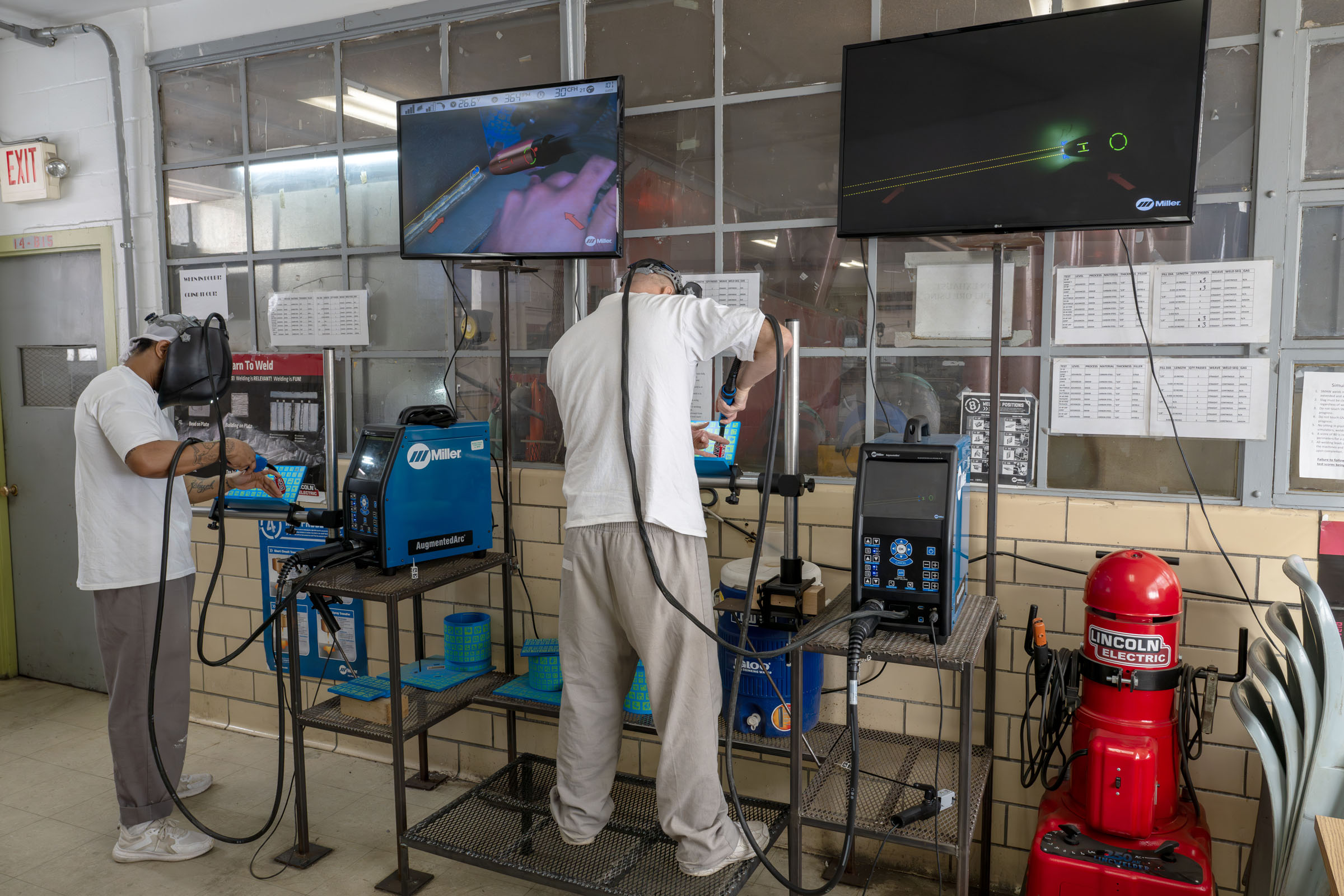
Hernandez and his classmates are completing the side project as part of BCC’s basic welding course in which students learn to use a cutting torch (gas fueled) and a plasma cutter (electrical) among other essential welding techniques and skills.
Like the heavy equipment simulators, high-tech virtual machines also help beginners understand the fundamentals of welding — giving new meaning to the term “cutting edge.”
“This class is an investment in myself and in my family,” said Hernandez, a BCC resident from Kansas City, Missouri. “I also just really enjoy welding. In prison, a lot of times everyone keeps to themselves. But in here, it’s a different atmosphere where we help each other and we’re not stagnant.”
Caleb Harmon, vocational educational instructor and expert welder himself, runs a tight but affable ship. The course
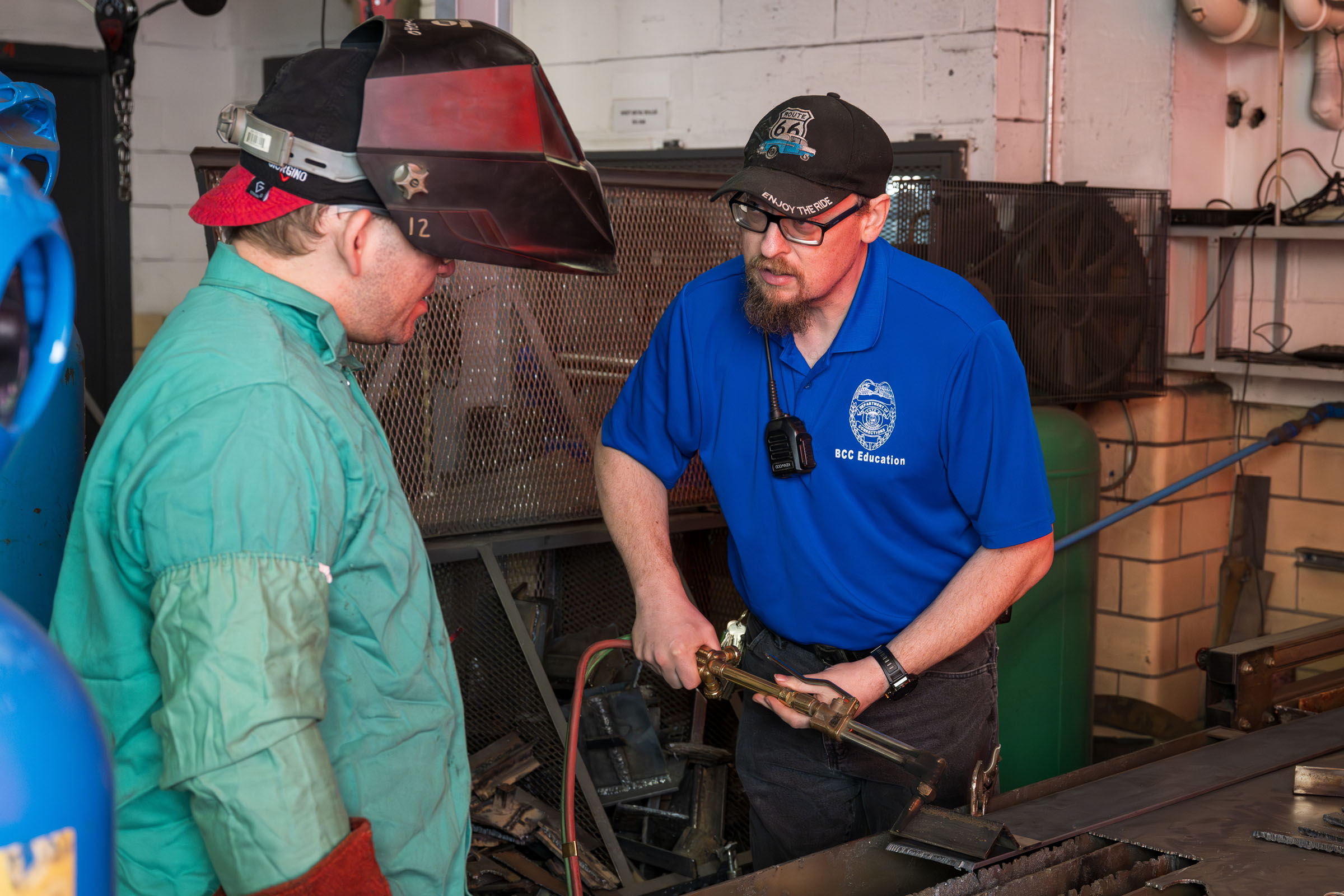
is a practiced welder.
runs three to five weeks, beginning with intensive book work and time on the simulator before students move into the shop.
“It’s one of the harder classes we have, and I tell the guys if you’re just looking for something easy that looks good for the parole board, this isn’t the class for you,” Harmon said. “You’re always working with different materials, learning new techniques and getting your body into uncomfortable positions.”
For Donovan Tarter, a graduate of Harmon’s class who completed his sentence in 2023, the experience literally forged a new life path. While serving time, Tarter’s habit of arriving late to class led Harmon to nickname him “Part Time.” But welding sparked a passion in Tarter that ultimately led to a more disciplined mindset — and a career.
Tarter now works at Courion Industries in St. Louis, where he has contributed to numerous projects — including a set of freight elevator doors for a Space X craft.
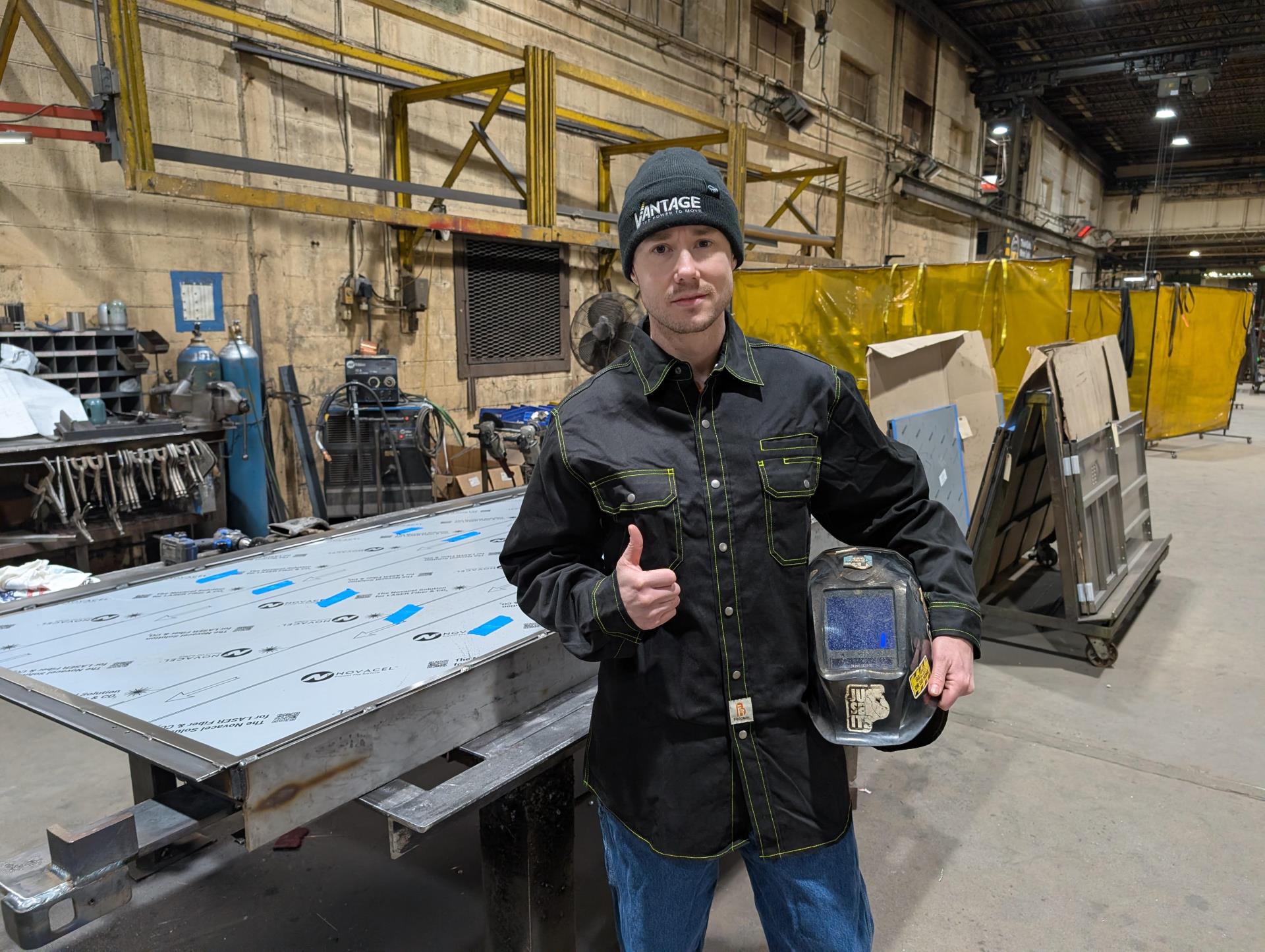
welding course, now works at Courion Industries
in St. Louis.
“I’ve worked in shipyards, fabrication jobs and the structural industry,” Tarter said. “I can bounce around. And I’ve only gotten more money as I’ve gained experience.”
For Tarter and other students improving their lives at BCC, the teachers — and the trades — are priceless.
“Mr. Harmon is —I can’t stress enough — the greatest instructor,” Tarter said. “He is humble. He wants to see you succeed. And that’s why I reach out to him yearly to let him know Tarter’s out here doing good. The fruits of your labor are paying off.”